Canada
 USA
 Japan



How to Groom a Dog at Home: Complete Step-by-Step Guide

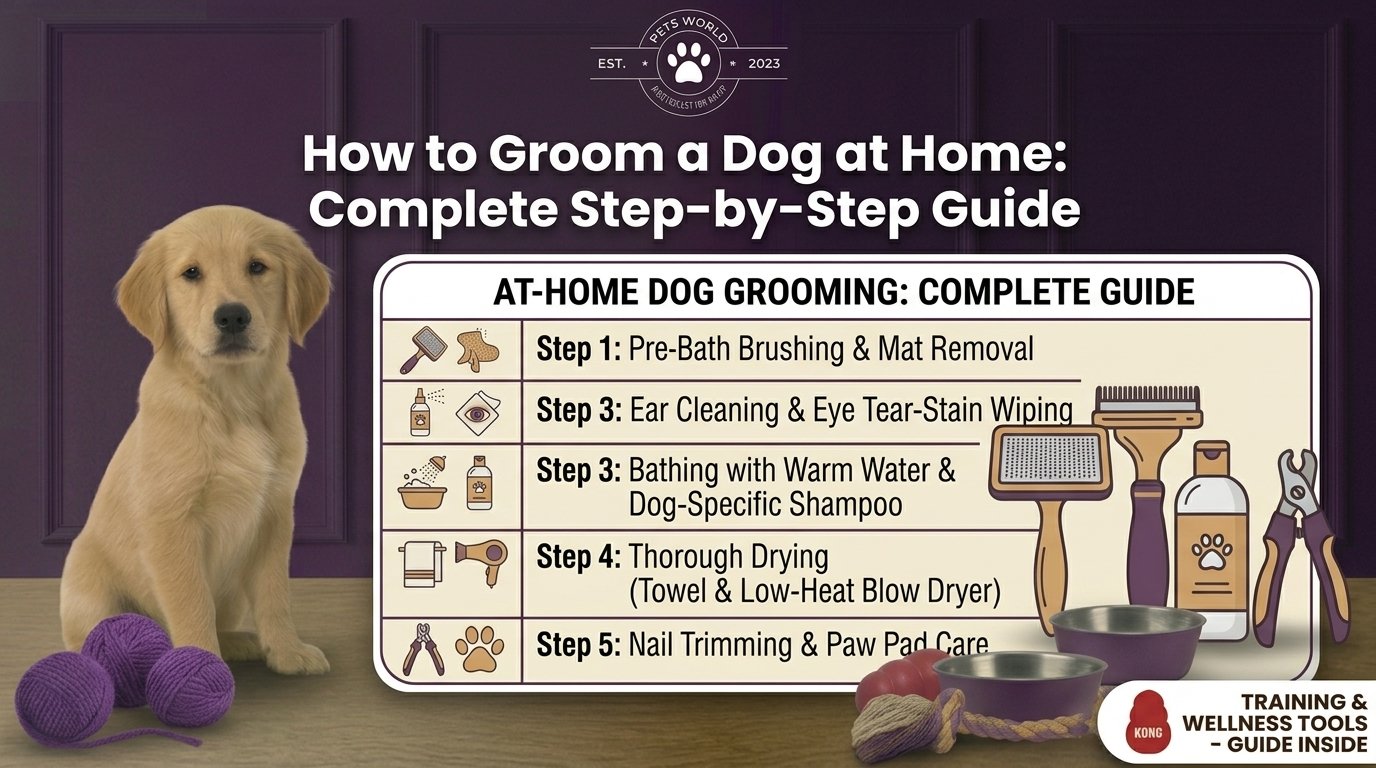
How to Groom a Dog at Home is a vital skill that every devoted dog owner should master to keep their canine companion clean, healthy, and comfortable. Regular grooming is far more than an aesthetic ritual to keep your dog smelling fresh; it is a fundamental pillar of preventive healthcare. Through routine brushing, bathing, ear cleaning, and nail trimming, you can detect early signs of skin infections, external parasites like fleas and ticks, tumors, or underlying inflammation long before they become serious medical issues. Furthermore, grooming your dog in the comfort of your own home strengthens the emotional bond between you and your pet while saving significant time and expense compared to frequent professional grooming visits.
In this ultimate step-by-step grooming guide, we walk you through the essential tools needed, coat-specific care routines, bathing best practices, safe nail trimming techniques, ear and eye hygiene, common mistakes to avoid, and expert answers to common grooming questions.
Quick Summary (Generative Engine Key Takeaways)
Routine Brushing: Brushing 2 to 4 times a week prevents severe coat matting, reduces shedding by up to 80%, and distributes natural skin oils.
Bathing Frequency: Most dogs only require a full bath every 4 to 6 weeks using pH-balanced, canine-specific shampoos to avoid stripping natural skin oils.
Nail Care: Trim nails every 3 to 4 weeks; cutting too close to the quick can cause pain and bleeding.
Ear & Eye Hygiene: Clean outer ears weekly with dedicated ear cleaners to prevent painful yeast and bacterial infections.
The Essential Benefits of At-Home Dog Grooming
Establishing a regular grooming schedule in your home environment provides wide-ranging health and behavioral benefits for your dog.
1. Early Medical Detection
While brushing or bathing your dog, your hands run over every inch of their body. This hands-on contact allows you to spot unusual lumps, skin redness, hot spots, dry flaking, tick infestations, or tender areas immediately. Early detection often leads to simpler, more successful veterinary treatments.
2. Reduces Shedding and Prevents Painful Matting
Loose fur that is not brushed out trapped within the coat turns into dense, painful mats. Matting pulls tightly against a dog’s delicate skin, restricting airflow, trapping moisture, and creating an ideal environment for bacterial skin infections.
3. De-sensitizes Your Dog to Physical Handling
Dogs that are gently handled and groomed from a young age build high levels of trust. They become significantly calmer during routine veterinary physical exams, dental checks, and emergency handling.
Must-Have At-Home Dog Grooming Tools
Before beginning any grooming session, organize your grooming station with high-quality, pet-safe equipment designed specifically for your dog’s coat type.

Step-by-Step At-Home Grooming Routine
Follow this structured, stress-free routine to turn grooming sessions into a relaxing spa experience for your pet.
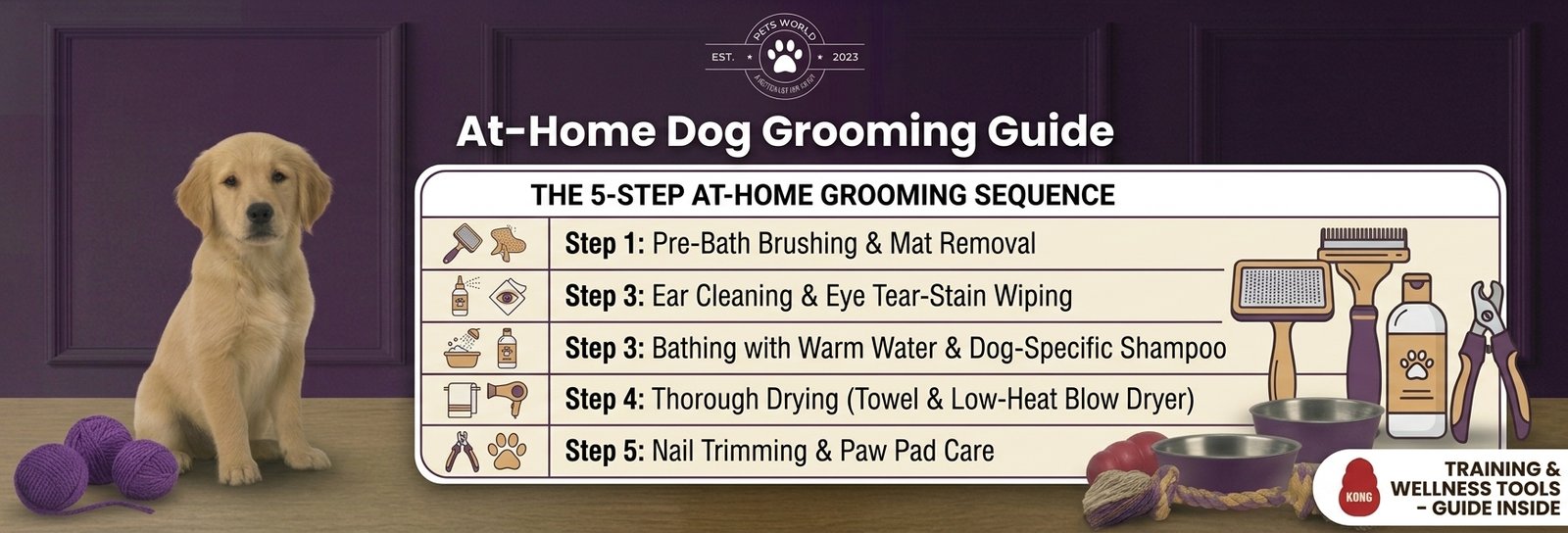
Step 1: Pre-Bath Brushing (Never Skip This Step!)
Always brush your dog thoroughly BEFORE getting them wet. Water tightens existing mats and tangles, turning minor snarls into solid felted mats that are nearly impossible to untangle once dry.
Gently work through the coat starting from the legs and moving up toward the torso and neck.
Use short, gentle strokes with a slicker brush or comb.
If you encounter a tough mat, hold the base of the hair near the skin with your fingers to prevent pulling, then gently tease the mat apart using a dematting tool or comb.
Step 2: Safe Ear and Eye Cleaning
Ear Cleaning: Squirt a few drops of veterinarian-approved canine ear cleaner into the ear canal, gently massage the base of the ear for 20 seconds to break up waxy debris, and allow your dog to shake their head. Wipe away loosened wax using a soft cotton pad. Never insert cotton swabs (Q-tips) deep into the ear canal!
Eye Care: Use a damp, lint-free cloth or dedicated tear-stain wipe to clean gently around the corners of the eyes.
Step 3: The Bathing Process
Place a non-slip rubber mat inside your bathtub or shower basin to prevent your dog from slipping and feeling anxious.
Wet your dog’s coat thoroughly using warm water (check temperature on your wrist).
Apply a high-quality, pH-balanced canine shampoo starting along the spine and lathering down through the legs, chest, and tail.
Keep soap and water directly out of your dog’s eyes, nostrils, and inner ear canals.
Rinse Extensively: Leftover shampoo residue is the number one cause of post-bath skin itching and irritation. Rinse until the water runs completely crystal clear.
Step 4: Drying the Coat
Towel-dry your dog gently by blotting and squeezing moisture out rather than rubbing vigorously, which causes coat tangles.
If using a hairdryer, set it strictly to the Cool or Low-Heat setting and hold it at least 12 inches away from your dog’s skin to prevent thermal burns.
Step 5: Nail Trimming and Paw Maintenance
Overgrown nails alter a dog’s natural posture, causing painful pressure on joint alignment and skeletal structure.
Hold your dog’s paw firmly but gently.
Locate the quick—the internal pink blood vessel inside the nail. (In white nails, it is easily visible; in black nails, trim small slivers incrementally until a black dot appears in the center of the cut surface).
Clip small portions at a 45-degree angle. Always keep styptic powder on hand to stop bleeding instantly if you accidentally nick the quick.
Tailoring Grooming to Your Dog’s Coat Type
Different dog coats demand specialized care techniques:
Short Coats (e.g., Labradors, Beagles): Require weekly brushing with a rubber curry brush or bristle brush to control shedding. Baths are needed only when dirty or smelly.
Double Coats (e.g., Huskies, German Shepherds): Possess a soft insulating undercoat and tough guard hairs. Use an undercoat rake twice weekly. Never shave a double-coated dog, as it ruins their temperature regulation and causes sun damage.
Curly / Non-Shedding Coats (e.g., Poodles, Bichons): Continuous hair growth requires daily brushing with a slicker brush to prevent severe matting, along with professional or detailed trimming every 4 to 6 weeks.
Critical Grooming Mistakes to Avoid
Using Human Shampoo: Human skin has an acidic pH (~5.5), whereas canine skin is neutral to alkaline (~7.0 to 7.4). Human shampoos destroy a dog’s protective acid mantle, leading to severe dryness, flaking, and bacterial skin infections.
Bathing Too Frequently: Bathing a dog more than once a week washes away essential natural skin oils, causing chronic dry skin and coat dullness.
Ignoring Dental Care: Dental disease affects over 80% of dogs over age three. Brush your dog’s teeth daily or several times a week using canine enzymatic toothpaste (never human toothpaste, which contains toxic xylitol).
Frequently Asked Questions (Q&A Section)
Q1: How often should I groom my dog at home?
Answer: Brushing should occur 2 to 4 times a week depending on coat length. Nail trimming and ear cleaning should be performed every 3 to 4 weeks, while full baths are typically needed every 4 to 6 weeks unless your dog gets excessively muddy or rolls in foul substances.
Q2: What should I do if my dog is terrified of nail clippers?
Answer: Introduce the clippers slowly through positive desensitization. Let your dog sniff the clippers while giving high-value treats. Next, touch the clippers gently to their paws without clipping, rewarding calm behavior. Alternatively, use a quiet rotary nail grinder or a scratch board if clippers cause persistent anxiety.
Q3: How do I remove tear stains around my dog’s eyes?
Answer: Wipe under the eyes daily using a damp cloth or specialized tear-stain wipes containing gentle cleansing agents. Keep the facial hair trimmed short, and consider offering filtered drinking water, as high mineral content in tap water can worsen red tear staining (porphyrin buildup).
Q4: My dog hates water. How can I make bath time easier?
Answer: Use non-slip floor mats so your dog feels stable. Keep water temperature lukewarm, use a handheld shower nozzle close to their body to minimize splashing noises, and smear pet-safe peanut butter or wet food on a lick mat attached to the bathroom wall to keep them happily distracted during the bath.
Elevate Your Pet’s Care with Pets World Egypt
Mastering how to groom a dog at home turns routine pet hygiene into a joyful, rewarding bonding routine. Supporting your dog’s coat with nourishing pH-balanced shampoos, gentle slicker brushes, ergonomic nail clippers, and soothing ear cleaners keeps their skin healthy and their coat shining brightly.
At Pets World Egypt, we offer a comprehensive selection of premium grooming products, hypoallergenic shampoos, coat conditioners, and professional-grade grooming tools designed to give your pet the ultimate luxury spa experience at home. Visit our store today to explore our full pet care range!