Canada
 USA
 Japan



How to Crate Train a Puppy: Ultimate Step-by-Step Guide

How to Crate Train a Puppy is one of the most transformative, effective, and humane training protocols you can implement from the very first day your young dog arrives home. To many first-time dog owners, placing a puppy inside a metal or plastic crate might initially feel restrictive or overly strict. However, when introduced properly through positive reinforcement, a crate taps directly into a dog’s natural biological “den instinct.” Canines are inherently den-dwelling animals that seek out small, secure, enclosed spaces to sleep, rest, and shelter from environmental stress. A well-conditioned crate becomes your puppy’s personal sanctuary—a calm refuge where they feel entirely safe and relaxed.
Beyond emotional security, crate training plays a vital role in accelerated housebreaking, preventing destructive chewing on household items, ensuring safe travel in vehicles, and eliminating stress during veterinary stays or grooming appointments. In this ultimate step-by-step guide, we explore the benefits of crate training, choosing the proper crate size, a 4-phase training workflow, handling nighttime whining, and expert answers to common pet parent questions.
Quick Summary (How to Crate Train a Puppy)
Den Instinct Synergy: Crate training utilizes a puppy’s instinctual desire to keep their sleeping area clean, accelerating potty training.
Never Use as Punishment: The crate must remain a 100% positive, stress-free haven; never send a puppy to their crate as a disciplinary penalty.
Sizing Matters: Choose a crate with a divider panel so it grows with your puppy; too much space invites elimination in far corners.
Gradual Duration: Increase crate duration systematically using food rewards, chew toys, and calm departure routines.
The Biological & Practical Benefits of Crate Training
Understanding the multi-faceted advantages of crate training ensures you stay consistent and patient throughout the process.
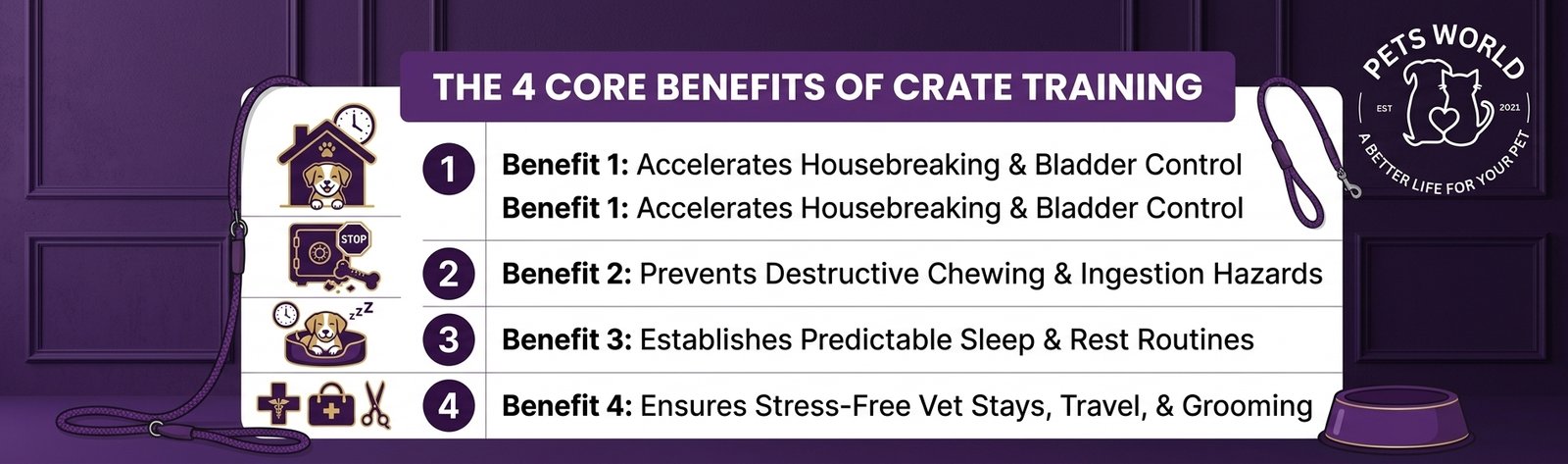
1. Fast-Tracking Housebreaking
Because dogs naturally avoid relaxing in their own waste, a properly sized crate teaches your puppy physical bladder and bowel control, helping them hold their urge until you release them at the outdoor potty spot.
2. Household Management and Injury Prevention
Young puppies explore their surroundings using their mouths. When unsupervised, they may chew electrical cords, swallow toxic house plants, or destroy expensive furniture. A comfortable crate keeps your puppy safe whenever you cannot maintain direct supervision.
3. Encouraging Essential Rest
Growing puppies require 18 to 20 hours of sleep per day for proper brain and bone development. In a bustling living room, puppies often suffer from sleep deprivation and overstimulation. The crate offers a quiet, dark environment for uninterrupted rest.
Choosing and Preparing the Perfect Crate
Selecting the correct type and size of crate sets the foundation for quick training success.
Comparing Crate Styles

Getting the Size Right
The crate must be large enough for your puppy to stand up fully without hunching, turn around in a comfortable circle, and lie down stretched out on their side.
The Divider Panel Strategy: If you buy an adult-sized wire crate for a growing puppy, use an adjustable divider panel to restrict access. If the crate is too large, your puppy may sleep in one end and eliminate in the opposite corner.
The 4-Phase Step-by-Step Crate Training Workflow
Never lock a puppy in a crate cold on their first day. Follow this structured 4-phase progression:
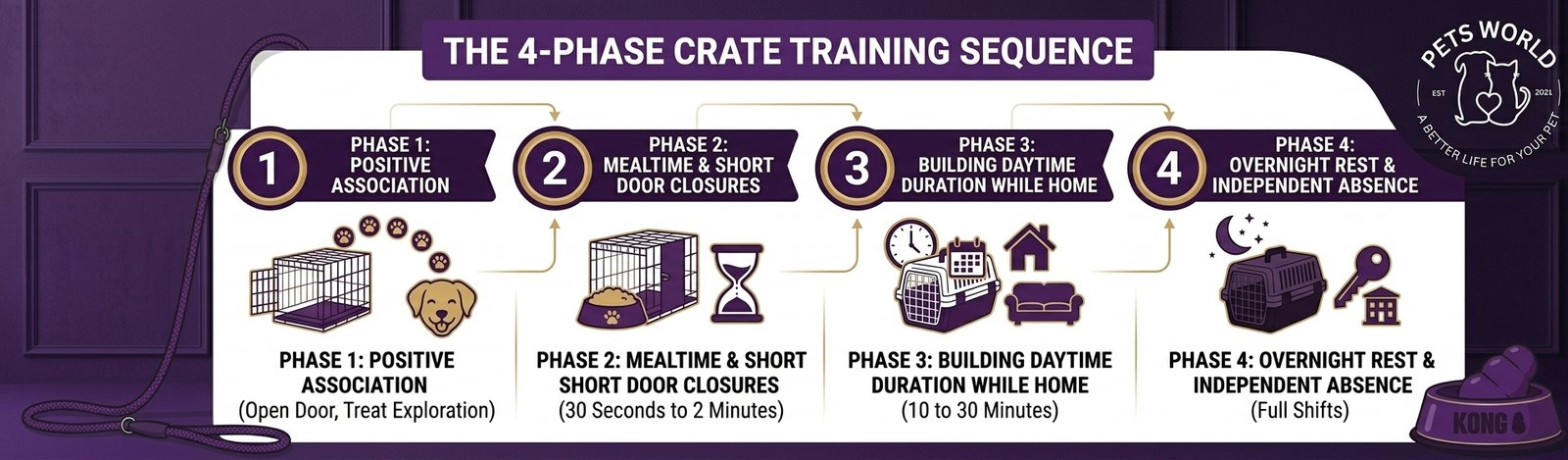
Phase 1: Creating Positive Associations (Open Door)
Place the crate in a central, high-traffic room (like the living room) with the door secured open.
Toss delicious, high-value treats (or a favorite toy) inside near the entrance. Allow your puppy to walk in and out freely without closing the door.
Feed your puppy’s regular daily meals right inside the open crate door so they associate the space with mealtime happiness.
Phase 2: Closing the Door for Short Intervals
Once your puppy happily steps inside to eat or hunt for treats, gently swing the door shut while they are eating.
Keep the door closed for 30 seconds, then open it smoothly before they finish eating. Praise them calmly.
Over several days, gradually extend the door closure from 1 minute to 5 minutes while sitting calmly right beside the crate.
Phase 3: Building Duration and Distance
Give your puppy a long-lasting frozen chew toy (such as a stuffed rubber toy) inside the crate and close the door.
Walk out of the room for 2 minutes, then return quietly without making a grand entrance.
Gradually increase your absence duration: 5 minutes, 10 minutes, 20 minutes, and up to 45 minutes. Always ensure your puppy is well-exercised and fed before longer sessions.
Phase 4: Overnight Crate Training
Place the crate in your bedroom near your bed for the first few nights. Hearing your breath and presence comforts a young puppy transitioning away from their mother and littermates.
Establish a calm bedtime routine: outdoor potty trip $\rightarrow$ quiet entry into crate $\rightarrow$ low lighting $\rightarrow$ soft ambient white noise or ticking clock.
How to Handle Crate Whining & Crying
Whining is a normal reaction when a puppy learns independent boundary control. Distinguishing between emotional demand whining and an actual potty emergency is crucial:
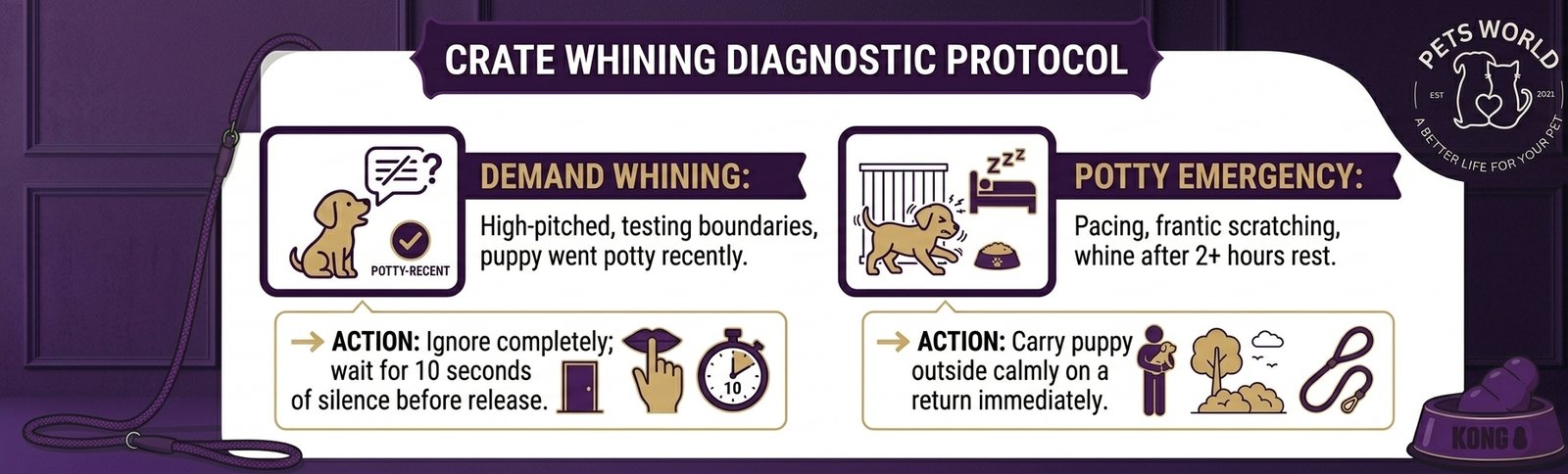
Demand Whining: If your puppy eliminates right before entering the crate and begins protesting after 5 minutes, they are testing limits. Ignore the whining completely. Releasing a puppy while they are actively barking or crying teaches them: Crying unlocks the door! Wait for at least 10 seconds of complete silence before opening the latch.
Potty Emergency: If your puppy has been sleeping peacefully for 2 hours and suddenly wakes up whining frantically, carry them outside calmly on a leash to their potty spot. Keep the trip strictly business—no playing, talking, or affection. Place them directly back in the crate immediately afterward.
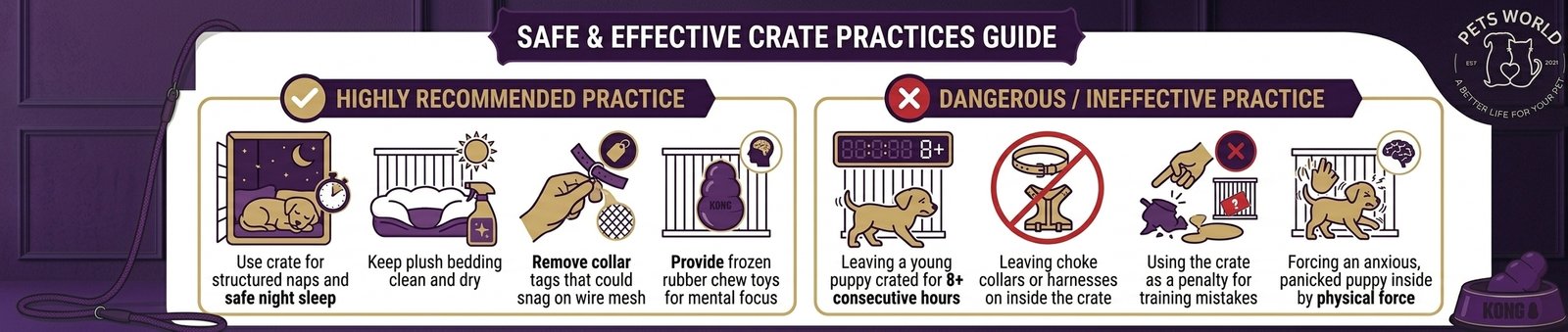
Critical Rules for Safe Crate Management
Frequently Asked Questions (Q&A Section)
Q1: How many hours can a puppy safely stay in a crate?
Answer: A general guideline for daytime crating is a puppy’s age in months plus one hour. For example, a 2-month-old puppy should not be crated for longer than 3 hours during the day without a potty and play break. Adult dogs should never exceed 8 hours maximum.
Q2: Should I put soft bedding inside the crate right away?
Answer: If your puppy is fully housebroken and does not chew fabric, soft plush bedding is ideal. However, if your puppy chews blankets or has frequent potty accidents, use a durable, waterproof crate pad or rubber mat to prevent accidental ingestion of loose fabric threads.
Q3: Where is the best place in the house to put the crate?
Answer: During the daytime, place the crate in an active family area (like the living room) so your puppy feels included. For nighttime sleep during the first few weeks, place the crate in your bedroom near your bed so the puppy feels secure and you can hear potty signals easily.
Q4: What should I do if my puppy is terrified of entering the crate?
Answer: Never force a fearful puppy inside. Back up to Phase 1: remove the crate door completely, sprinkle high-value treats around the exterior, fed meals near the entrance, and let them explore at their own pace over several days using extreme patience.
Create a Safe Sanctuary with Pets World Egypt
Mastering how to crate train a puppy grants your young companion the gift of emotional security, safe rest, and clear house manners. By pairing step-by-step positive reinforcement with ergonomic wire crates, washable crate pads, durable rubber chew toys, and healthy training treats, you transform crate time into an enjoyable daily routine.
At Pets World Egypt, we offer a comprehensive range of veterinarian-approved puppy crates, adjustable divider panels, plush waterproof pads, soothing chew toys, and premium puppy foods. Visit our online store today to equip your home for a lifetime of comfortable, confident pet care!