
 Canada
 USA
 Japan



How to Potty Train a Puppy: Vet complete Step-by-Step Guide

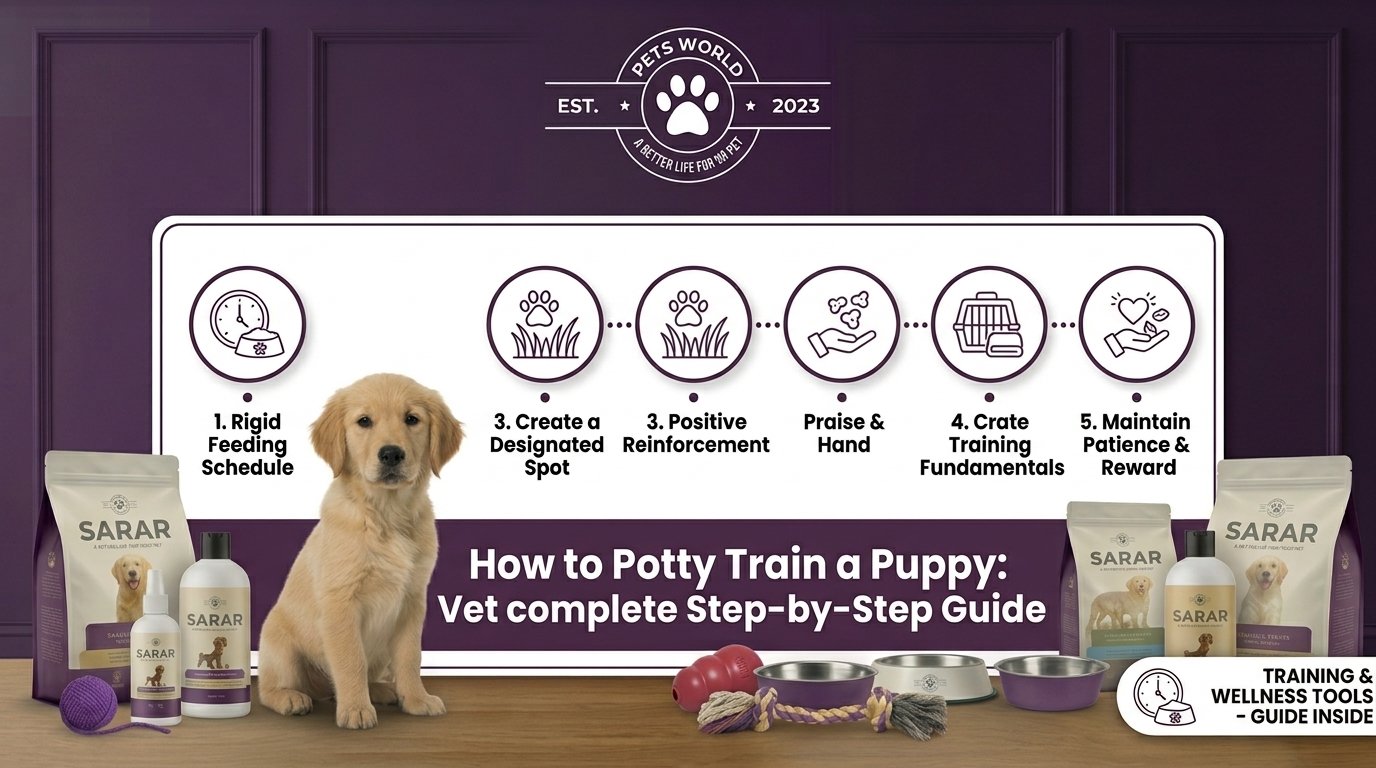
How to Potty Train a Puppy is one of the very first and most crucial milestones you will face as a new pet owner. Bringing a adorable puppy home brings endless joy, but dealing with frequent indoor accidents on your rugs and floors can quickly become overwhelming. House-training requires patience, unwavering consistency, positive reinforcement, and a deep understanding of your puppy’s biological development. Young puppies have small bladders and immature muscle control, meaning they cannot hold their urine for extended periods. However, by establishing a structured daily schedule, creating a designated bathroom zone, and rewarding correct behavior, you can successfully potty train your puppy in a matter of weeks.
In this comprehensive house-training guide, we walk you through the biology of puppy bladder control, the golden rules of potty training, step-by-step schedules, crate training vs. puppy pads, dealing with indoor accidents, and answering the most common house-training questions.
Quick Summary (How to Potty Train a Puppy)
Bladder Rule of Thumb: A puppy can generally hold their bladder for one hour for every month of their age (e.g., a 2-month-old puppy can hold it for about 2 hours).
Consistency is Everything: Take your puppy to the exact same potty spot at predictable times throughout the day.
Immediate Rewards: Praise and reward your puppy with a high-value treat within 3 seconds of them finishing outside.
Never Punish Accidents: Scolding or rubbing a puppy’s nose in a mess creates fear and causes them to hide when peeing indoors.
Understanding Your Puppy’s Biological Clock and Capacity
Before starting any training program, it is vital to set realistic expectations based on your puppy’s physical age and biological capacity.
Puppies do not gain full neurological control over their bladder and sphincter muscles until they are around 16 to 20 weeks old. Expecting a 2-month-old puppy to sleep through an 8-hour night without peeing is physically impossible.
The Age-to-Hour Bladder Capacity Formula
A reliable general formula to estimate your puppy’s maximum physical bladder holding capacity is:
8 Weeks Old (2 Months): Can hold urine for a maximum of 2 hours during the day.
12 Weeks Old (3 Months): Can hold urine for up to 3 hours.
16 Weeks Old (4 Months): Can hold urine for up to 4 hours.
6 Months Old: Can hold urine for up to 6 hours.
Note: This formula applies to resting or sleeping periods. Active, playing, or eating puppies will need to potty much more frequently—often every 30 to 45 minutes!
The 5 Golden Rules of Successful House-Training
To house-train your puppy efficiently without causing confusion or anxiety, anchor your routine around these five proven behavioral principles.
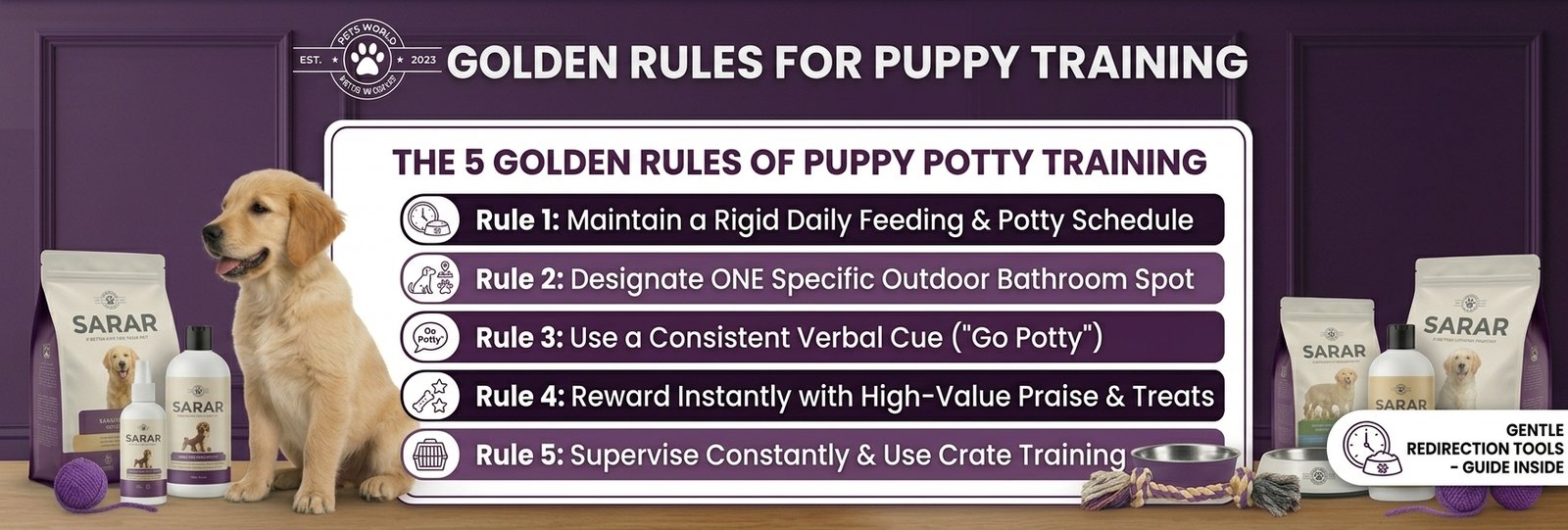
Rule 1: Maintain a Rigid Schedule
Puppies thrive on routine. Feeding your puppy at the exact same times every day produces predictable digestion and elimination times. If food is left out for free-feeding all day, predicting when your puppy needs to eliminate becomes nearly impossible.
Rule 2: Choose a Designated Potty Spot
Select one specific area in your yard or outdoors to serve as your puppy’s official bathroom. The lingering scent of previous eliminations in that spot naturally prompts your puppy’s physiological urge to pee or poop again.
Rule 3: Introduce a Verbal Cue
As soon as your puppy begins eliminating at their designated spot, introduce a calm cue phrase like “Go Potty” or “Business Time.” Over time, your puppy will associate this phrase with the physical action of eliminating, allowing you to prompt them on command during cold or rainy days.
Rule 4: Reward Instantly
Timing is everything in dog training. You must praise your puppy and offer a small, delicious treat within 2 to 3 seconds of them completing their business. If you wait until you walk back inside the house to give a treat, your puppy will associate the reward with entering the house, not peeing outside!
Rule 5: Keep a Constant Eye
Unsupervised puppies will make mistakes. When your puppy is loose indoors, keep them in the same room as you or use the “umbilical cord method” by clipping their leash to your belt. If you cannot give them 100% of your attention, place them in a safe, enclosed space like a dog crate or puppy playpen.
Step-by-Step Daily Potty Schedule
Creating a strict daily routine eliminates guesswork. Here is a recommended schedule framework for an 8 to 12-week-old puppy:
First Thing in the Morning: Take your puppy outside immediately upon waking up—no delays!
Post-Meal Trips: Take your puppy out 10 to 20 minutes after every meal. Digestion triggers an involuntary gastrocolic reflex that prompts elimination shortly after eating.
Post-Nap Trips: Always take your puppy out the moment they wake up from a nap.
Post-Play Trips: Energetic play puts pressure on the bladder. Take a potty break immediately after vigorous play sessions.
Before Bedtime: Take your puppy to their spot right before placing them in their sleeping crate for the night.
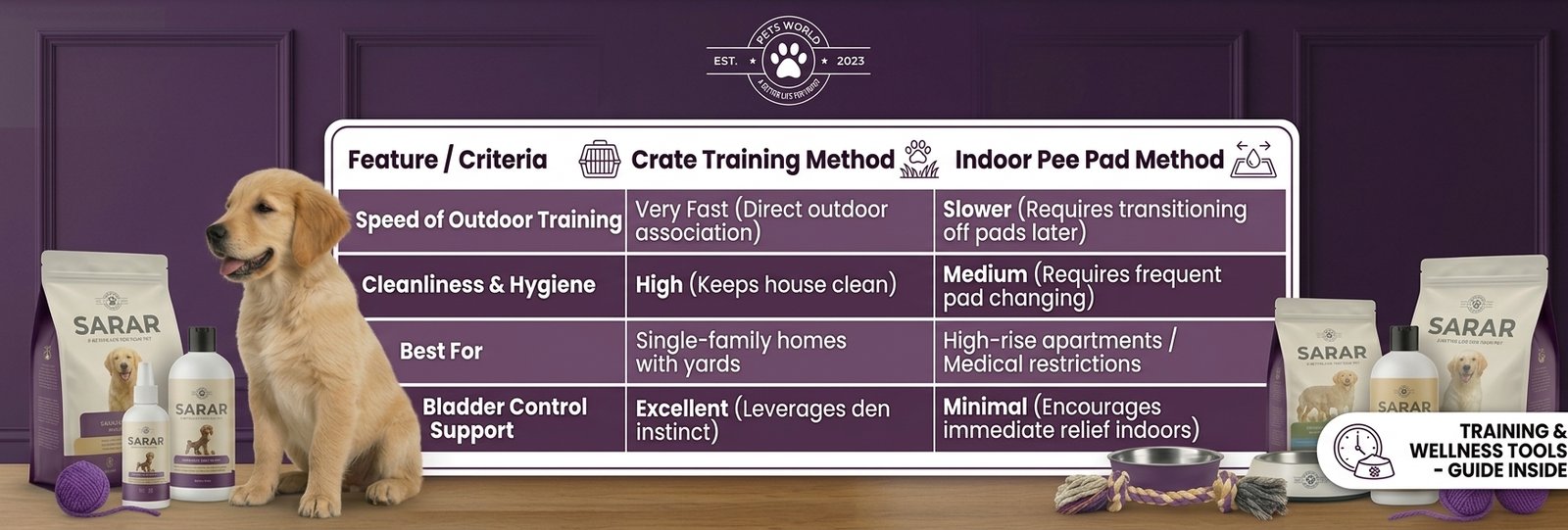
Crate Training vs. Puppy Pee Pads: Which Should You Use?
Choosing the right indoor tool determines how quickly your puppy transitions to adult bathroom habits.
Method A: Crate Training (Highly Recommended)
Dogs are naturally den animals that inherently dislike sleeping in their own waste. A properly sized dog crate utilizes this natural instinct to encourage bladder control.
Sizing Rule: The crate should only be large enough for the puppy to stand up, turn around comfortably, and lay down flat. If the crate is too large, the puppy will use one corner as a bedroom and the opposite corner as a bathroom!
Method B: Puppy Pee Pads (Best for Apartments)
Pee pads are absorbent pads placed indoors for puppies to eliminate on. While useful for high-rise apartment dwellers or unvaccinated puppies who cannot step on outdoor soil yet, pee pads can prolong the outdoor house-training process because they teach the puppy that eliminating indoors on soft surfaces is acceptable.
How to Handle Indoor Accidents Without Setbacks
Accidents are a normal part of the learning process. How you react to an indoor mess determines whether your puppy learns trust or fear.
1. What to Do During an Accident
If you catch your puppy in the middle of peeing or pooping indoors:
Make a sudden, neutral noise (like clapping your hands once) to startle them into pausing briefly.
Immediately scoop them up gently and carry them straight to their outdoor potty spot.
If they finish eliminating outside, shower them with praise and a treat!
2. What NEVER to Do
Never Scold or Yell: Yelling at a puppy after an accident does not teach them where to pee; it only teaches them that peeing in front of you is dangerous. This results in puppies hiding behind couches or under beds to pee secretly.
Never Rub Their Nose in It: This archaic technique is cruel, ineffective, and damages your bond with your pet.
Clean with Enzymatic Cleaners: Standard household cleaners containing ammonia actually smell like urine to a dog, encouraging them to pee in that spot again. Always use an enzymatic cleaner that breaks down organic urine proteins completely.
Frequently Asked Questions (Q&A Section)
Q1: How long does it take to fully potty train a puppy?
Answer: On average, fully house-training a puppy takes between 4 to 6 months, depending on consistency, breed, and age. Some puppies master it in a few weeks, while smaller toy breeds with tiny bladders may take up to a year to achieve complete reliability.
Q2: Why does my puppy pee indoors right after coming back from outside?
Answer: This usually happens when a puppy gets distracted outside by birds, smells, or outdoor noises and forgets to eliminate. When they return to the quiet indoor environment, they relax, triggering their bladder. To fix this, keep outdoor trips strictly focused on business (no play until after they pee), and if they don’t go within 5 minutes outside, place them in their crate indoors for 10 minutes, then try again.
Q3: Should I wake my puppy up at night to go potty?
Answer: For young puppies aged 8 to 12 weeks, yes. Setting an alarm to take them out once during the middle of the night prevents uncomfortable accidents in their crate. As they reach 14 to 16 weeks, most puppies can sleep through an 8-hour night without needing a midnight potty break.
Q4: Can small dog breeds be potty trained as easily as large breeds?
Answer: Toy breeds (like Chihuahuas, Maltese, and Toy Poodles) have significantly smaller bladders and faster metabolisms, requiring more frequent potty breaks than larger breeds. They require extra patience, stricter schedules, and smaller treat rewards during house-training.
Simplify House-Training with Pets World Egypt
Potty training your puppy is an investment in years of stress-free companionship. Equipping your home with the right supplies—such as comfortable crates, high-potency enzymatic cleaning sprays, absorbent training pads, and delicious training treats—makes the journey smooth and rewarding.
At Pets World Egypt, we offer a comprehensive range of premium puppy care essentials, training accessories, and hygienic supplies tailored to support you every step of the way. Visit our shop today to give your puppy the best start in life!