Canada
 USA
 Japan



How to Socialize a Puppy: Ultimate Guide for a Confident Dog

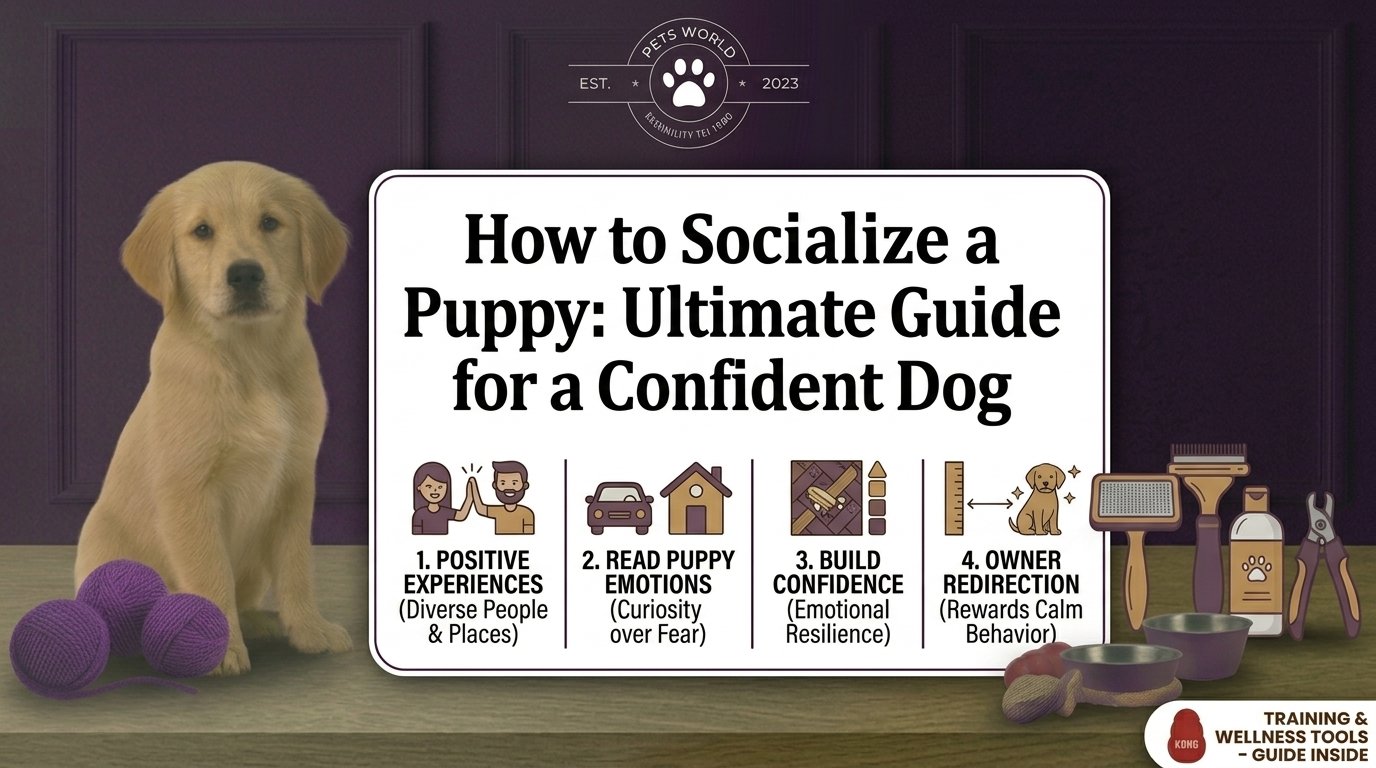
How to Socialize a Puppy is the single most critical investment you can make in your dog’s long-term behavioral development, mental health, and overall well-being. Many new pet parents believe that puppy socialization simply means letting their young dog play with other dogs at the park. In reality, socialization is a structured process of gently exposing your puppy to a vast array of novel sights, sounds, textures, people, animals, and environments in a controlled, positive manner. Proper early exposure teaches your puppy that the world is a safe, predictable place, preventing future behavioral issues such as fear-based aggression, severe anxiety, territorial reactivity, and excessive shyness.
In this ultimate step-by-step socialization guide, we explore the developmental neurology behind the critical socialization window, safe exposure strategies prior to full vaccination, the famous “Rule of 100,” common socialization mistakes, and expert answers to pressing behavioral questions.
Quick Summary (How to Socialize a Puppy)
The Critical Window: The primary developmental socialization period opens at 3 weeks and closes abruptly between 8 and 16 weeks of age.
Quality Over Quantity: Every new experience must be paired with positive reinforcement (treats, praise, play) to create pleasant emotional associations.
Balanced Safety: Socialization can begin safely before full vaccination by utilizing controlled environments like indoor puppy classes and carrier outings.
Neutrality is the Goal: Successful socialization teaches a dog to remain calm and neutral in busy environments, rather than demanding to greet every person or dog they see.
The Neuroscience Behind the Critical Socialization Window
Understanding your puppy’s brain development explains why early socialization carries such a profound, permanent impact.
Between 8 and 16 weeks of age, a puppy’s brain undergoes rapid synaptic formation. During this short biological window, young dogs are naturally curious and far more accepting of novel stimuli than fear-averse. After 16 weeks, the brain’s developmental window closes, and a puppy’s survival instincts kick in—causing them to treat unfamiliar objects, strange sounds, or unknown people with inherent suspicion and fear.
Why Missing the Window Causes Behavioral Problems
Dogs that are isolated during this 8-to-16-week period often develop chronic behavioral challenges in adulthood:
Fear-Based Reactivity: Lunging, barking, or snapping at unfamiliar dogs or strangers due to insecurity.
Separation Anxiety: Inability to handle environmental changes or short periods of isolation.
Noise Phobias: Extreme panic during thunderstorms, fireworks, vacuum cleaner use, or traffic noises.
Veterinary & Grooming Anxiety: Intense resistance during physical handling, nail trimming, or medical examinations.
The 5 Pillars of Comprehensive Puppy Socialization
To raise a resilient adult dog, socialization must extend far beyond meeting other canines. You must systematically introduce your puppy to five distinct pillars of life experience.
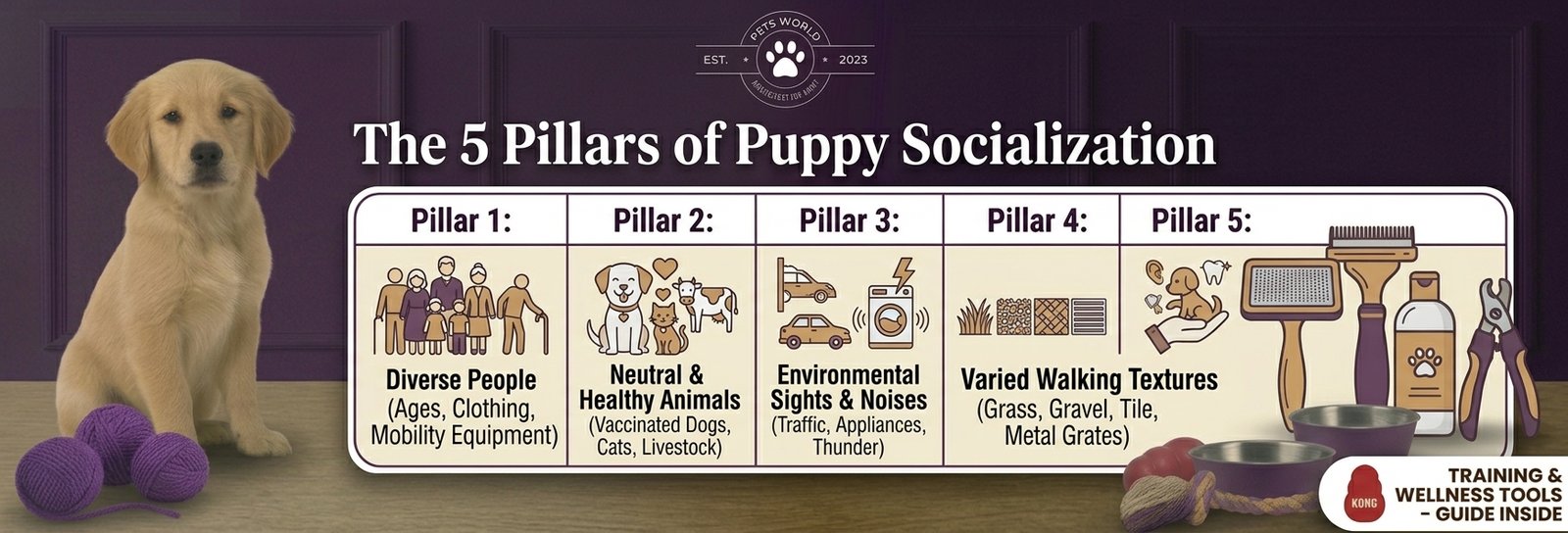
Pillar 1: People of All Shapes, Ages, and Appearances
Puppies do not automatically generalize that all humans are friendly. A puppy raised around adults may react fearfully to children or people wearing unusual clothing.
Expose your puppy to children, toddlers, senior citizens, and people wearing hats, helmets, sunglasses, bulky coats, or raincoats.
Introduce people using mobility equipment such as wheelchairs, crutches, walking canes, and strollers.
Pillar 2: Neutral and Friendly Animals
Quality interactions matter far more than quantity. A single negative encounter with an aggressive adult dog can traumatize a puppy for life.
Arrange controlled playdates exclusively with well-mannered, fully vaccinated adult dogs known for gentle behavior.
Expose your puppy to other species (such as house cats or livestock) from a safe distance, rewarding calm, non-chasing behavior.
Pillar 3: Environmental Sights and Sounds
Desensitizing your puppy to everyday household and city noises prevents life-long phobias.
Household Sounds: Vacuum cleaners, blenders, hair dryers, doorbells, and dropped kitchen utensils.
Outdoor Sounds: Sirens, honking cars, construction equipment, skateboards, and thunderstorms (use recorded sound effects played softly at first).
Pillar 4: Varied Textures and Surfaces
Walking over unfamiliar or unstable surfaces builds physical confidence and spatial awareness.
Encourage your puppy to walk comfortably over wet grass, gravel, wooden decks, slick tile floors, plush carpets, metal grates, and cardboard boxes.
Pillar 5: Cooperative Body Handling
Preparing your puppy for a lifetime of vet visits and grooming sessions requires daily gentle handling exercises.
Gently handle your puppy’s paws, touch their toe nails, peek inside their ears, lift their lips to inspect teeth, and wrap your arms around them in a gentle hug restraint.
Reward every handling session with high-value treats so the puppy associates physical touch with positive outcomes.
The “Rule of 100” Socialization Framework
A popular and effective guideline among professional canine behaviorists is the “Rule of 100.” The goal is to expose your puppy to 100 different positive experiences, objects, and people during their first 100 days at home.

Safe Socialization Before Complete Vaccination
A major dilemma for pet owners is balancing socialization with disease prevention. Parvovirus and Distemper survive in public soil, making unprotected puppy contact risky. However, keeping a puppy strictly indoors until 16 weeks causes permanent behavioral damage.
The American Veterinary Society of Animal Behavior (AVSAB) officially recommends that puppies begin socialization classes and controlled public outings as early as 7 to 8 weeks of age, provided they have received their first round of core vaccinations and a deworming treatment.
Safe Socialization Strategies:
The “Puppy Taxi” Method: Carry your puppy in your arms, in a shoulder bag, or in a stroller when visiting public areas like hardware stores or parks so they experience sights and sounds without touching contaminated ground.
Controlled Car Rides: Park near busy shopping centers or schools and let your puppy observe human traffic through open car windows while feeding them treats.
Sanitized Indoor Classes: Enroll in accredited puppy socialization classes that require vaccine proof and sanitize indoor flooring rigorously.
Positive Exposure vs. Over-stimulation (Flooding)
Socialization is NOT about forcing your puppy to endure overwhelming situations. There is a vast difference between positive exposure and emotional flooding.

Critical Socialization Mistakes to Avoid
Forcing Interactions: Never force your puppy to approach a stranger or object if they show fear cues (tucking tail, backing away, lowering body). Always allow the puppy to approach at their own pace.
Rewarding Fear Behavior Inadvertently: If your puppy trembles at a loud noise, avoid overly dramatic coddling in a panicked voice, which can reinforce that the situation is genuinely dangerous. Instead, remain calm, upbeat, and offer a favorite toy or treat.
Focusing Only on Dog-to-Dog Play: Allowing your puppy to rush up to every dog they see creates a “frustrated greeter” who barks endlessly on leash as an adult. Teach your puppy that most dogs are to be observed calmly from a distance.
Frequently Asked Questions (Q&A Section)
Q1: Is it too late to socialize a dog after 16 weeks of age?
Answer: While the primary critical window closes around 16 weeks, dogs can still learn and adapt throughout their lives. Socializing an older puppy or adult dog requires a slower, more deliberate process called desensitization and counter-conditioning, using higher-value rewards and greater distance from triggers.
Q2: How can I tell if my puppy is overwhelmed during socialization?
Answer: Watch for subtle stress indicators: lip licking, yawning when not tired, turning their head away, panting, raised paws, refusing high-value treats, or trying to hide behind your legs. If you notice these signs, calmly create distance from the trigger until your puppy relaxes.
Q3: How many new experiences should I introduce per day?
Answer: Quality is far more important than quantity. Aim for 1 to 3 short, positive exposures per day. Overloading a puppy with ten intense new experiences in a single afternoon can cause emotional fatigue and over-stimulation.
Q4: Should I let strangers pet my puppy everywhere we go?
Answer: No. You are your puppy’s protector. If your puppy looks hesitant, politely tell strangers, “We are in training right now, thank you!” The goal is to teach your puppy that strangers are neutral and safe, not that every stranger will invade their personal space.
Raise a Confident Pet with Pets World Egypt
Mastering how to socialize a puppy provides your dog with the emotional security needed to navigate the world with joy and confidence. Supporting your puppy with proper walking harnesses, long training leashes, high-reward training treats, and interactive travel gear turns every outing into an empowering adventure.
At Pets World Egypt, we provide pet parents with top-quality training accessories, puppy treats, travel carriers, and expert care advice to ensure your pet thrives at every stage of life. Visit our online store today to equip your companion for a bright, confident future!