Canada
 USA
 Japan


Puppy Feeding Schedule: Ultimate Chart&Guide for all Stages

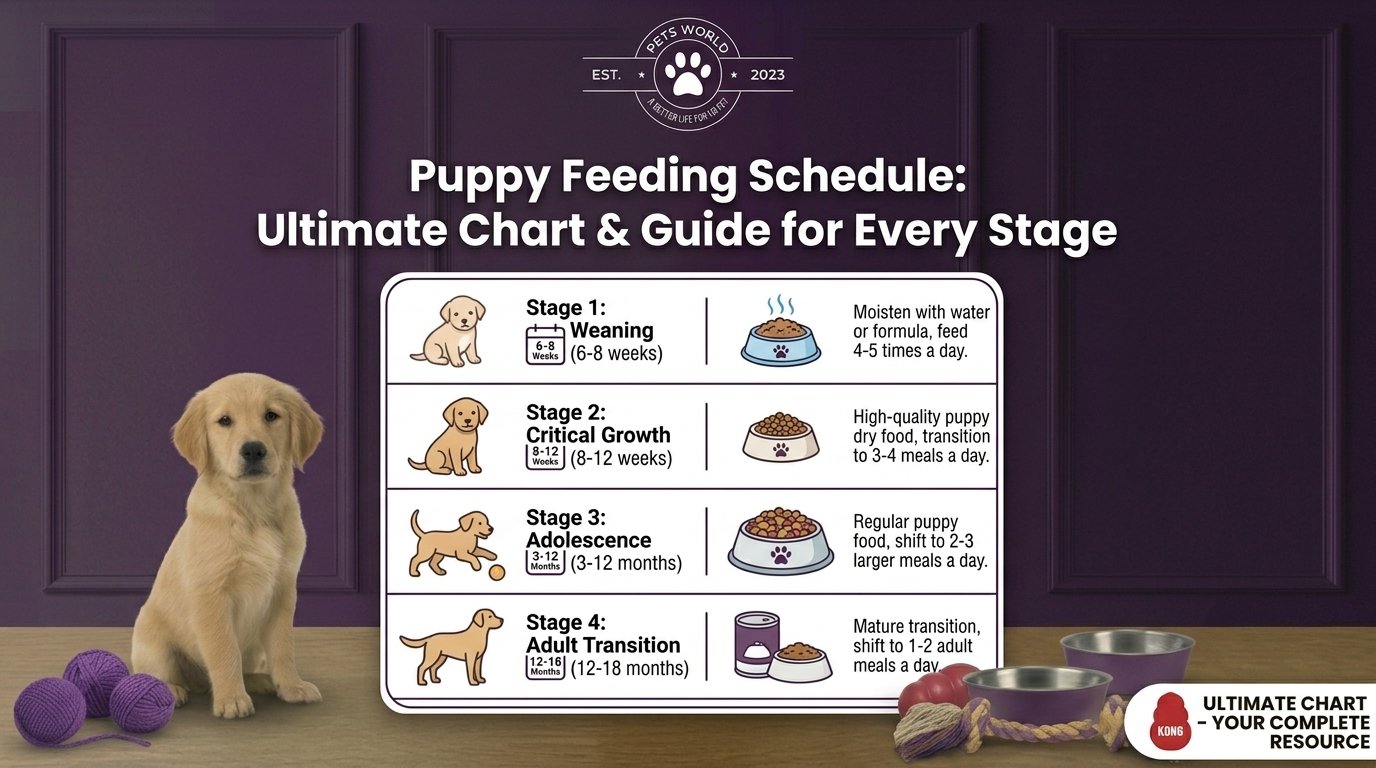
Puppy Feeding Schedule is the foundational nutritional framework every pet owner must establish to ensure their young canine grows into a healthy, vibrant adult dog. During their first year of life, puppies undergo an astonishing physical transformation, quadrupling—or in large breeds, multiplying by fifty times—their birth weight. This rapid growth phase requires significantly higher calories, proteins, essential fats, calcium, and phosphorus compared to adult dogs. However, feeding a puppy is not simply about filling a bowl whenever it empties. Free-feeding or feeding inconsistent portions at random times can trigger severe digestive distress, obesity, skeletal malformations, or dangerous blood sugar drops. Establishing a structured, age-appropriate feeding schedule provides your puppy with stable energy, predictable digestion, and effortless house-training.
In this comprehensive nutritional guide, we cover the science of puppy growth, detailed age-by-age feeding schedules, portion calculation, dry versus wet food comparisons, toxic foods to avoid, and expert answers to common feeding questions.
Quick Summary (Puppy Feeding Schedule)
Meal Frequency by Age: 8–12 weeks (4 meals/day), 3–6 months (3 meals/day), 6–12 months (2 meals/day).
High Caloric Needs: Puppies require up to twice as many calories per pound of body weight as adult dogs to support rapid tissue and bone growth.
Large Breed Caution: Large and giant breed puppies require specialized formulas with controlled calcium and fat levels to prevent rapid growth skeletal disorders.
House-Training Connection: Feeding meals at fixed times creates predictable bathroom schedules 10 to 20 minutes post-meal.
Why a Structured Puppy Feeding Schedule Is Essential
Creating a rigid feeding routine does far more than just satisfy your puppy’s appetite; it plays a critical role in their physical health and behavioral training.
1. Supports Steady Growth without Skeletal Strain
Puppies need balanced energy intake. Overfeeding leads to rapid weight gain, putting excessive strain on developing joints and bones, which is especially hazardous for large breeds like Golden Retrievers and German Shepherds. Conversely, underfeeding can lead to stunted growth and weakened immune function.
2. Prevents Hypoglycemia in Small Breeds
Toy and small-breed puppies (such as Chihuahuas, Maltese, and Pomeranians) have tiny liver glycogen stores and exceptionally high metabolic rates. Spacing meals evenly across 4 daily feedings prevents dangerous drops in blood sugar (hypoglycemia), which can cause lethargy, muscle tremors, or seizures.
3. Synchronizes Digestion for Fast Potty Training
What goes into a puppy at predictable times comes out at predictable times! Digestion triggers an involuntary reflex (the gastrocolic reflex) that prompts a puppy to eliminate within 10 to 20 minutes after eating. A scheduled routine allows you to predict bathroom trips accurately.
The Master Puppy Feeding Schedule by Age
As your puppy matures, their metabolic rate slows down and their stomach capacity increases, allowing you to reduce the number of daily meals while adjusting portion sizes.
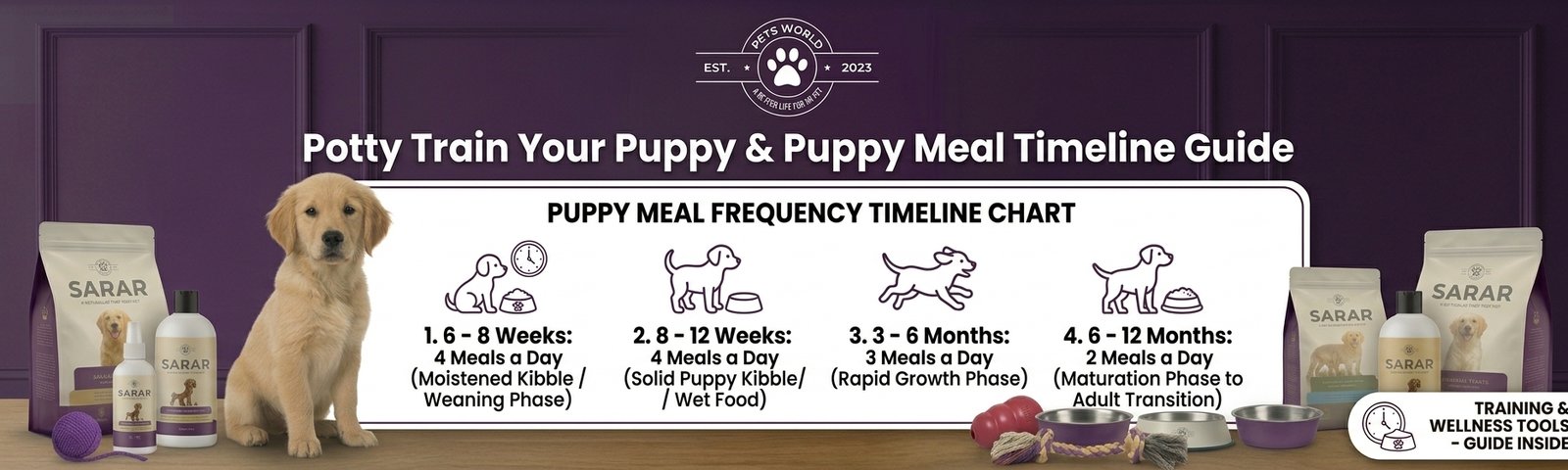
Phase 1: 6 to 8 Weeks Old (Weaning Phase)
At this stage, puppies transition from their mother’s milk to solid food.
Meal Frequency: 4 meals per day (Morning, Mid-Day, Early Evening, Late Evening).
Food Texture: High-quality puppy kibble softened with warm water or puppy milk replacer to create a soft gruel consistency that is easy on tender baby gums.
Phase 2: 8 to 12 Weeks Old (Early Growth)
This is the standard age when puppies arrive at their new forever homes.
Meal Frequency: 4 meals per day.
Sample Time Schedule:
Meal 1: 7:00 AM
Meal 2: 11:00 AM
Meal 3: 3:00 PM
Meal 4: 7:00 PM
Note: Lift the food bowl after 15 to 20 minutes, whether the puppy has finished or not, to reinforce routine.
Phase 3: 3 to 6 Months Old (Juvenile Phase)
Teething begins, baby fat disappears, and lean muscle structure develops rapidly.
Meal Frequency: 3 meals per day.
Sample Time Schedule:
Meal 1: 7:00 AM
Meal 2: 1:00 PM
Meal 3: 6:30 PM
Phase 4: 6 to 12 Months Old (Maturation Phase)
The puppy approaches their adult height and framework.
Meal Frequency: 2 meals per day (Morning and Evening).
Transition Time: Small breeds can transition to adult food around 9 to 12 months, whereas large/giant breeds should remain on specialized puppy food until 15 to 24 months.
How Much Food Should You Feed? Portion Control & Breed Guidelines
Determining the exact cup measurement depends on your puppy’s expected adult weight, activity level, and the caloric density (kcal/cup) of the specific commercial food. Always refer to the feeding chart printed on your premium puppy food bag as a baseline starting point, then adjust based on your puppy’s Body Condition Score (BCS).
Body Condition Scoring (The Visual & Touch Test)
Underweight: Ribs, spine, and pelvic bones are visible from a distance with no palpable fat cover. Action: Increase daily portion by 10%.
Ideal Weight: Ribs are easily felt under a light layer of fat, a visible waistline is noticeable behind the ribs when viewed from above, and an abdominal tuck is present from the side. Action: Maintain current portion.
Overweight: Ribs are difficult to feel under a thick fat layer, no visible waistline from above, and a rounded abdomen. Action: Decrease daily portion by 10%.
Dry Kibble vs. Wet Food vs. Mixed Feeding
Choosing the right format of food keeps your puppy enthusiastic while providing balanced nutrition.

Toxic Foods to Keep Away from Your Puppy’s Bowl
Puppy eyes can be convincing when begging at the dinner table, but many human foods are extremely poisonous to dogs:
Chocolate & Caffeine: Contains theobromine, causing cardiac arrhythmia and seizures.
Grapes & Raisins: Induces acute renal (kidney) failure even in small quantities.
Onions, Garlic & Chives: Damages red blood cells, causing severe hemolytic anemia.
Xylitol (Artificial Sweetener): Found in peanut butter and sugar-free treats; triggers rapid insulin release and liver failure.
Cooked Bones: Splinters easily inside the gut, causing internal punctures or intestinal blockages.
Frequently Asked Questions (Q&A Section)
Q1: Should I leave food out all day for my puppy (free-feeding)?
Answer: No. Free-feeding is strongly discouraged by veterinarians. It leads to overeating, picky eating habits, obesity, and makes predicting potty breaks impossible. Scheduled meal times teach discipline and allow you to monitor appetite changes that might indicate illness.
Q2: What should I do if my puppy refuses to eat their scheduled meal?
Answer: Leave the bowl down for 15 to 20 minutes. If your puppy does not eat, remove the bowl until the next scheduled mealtime—do not offer human scraps or excessive treats in between. A healthy puppy will quickly learn to eat during meal times. If anorexia lasts longer than 24 hours or is accompanied by lethargy or vomiting, consult your vet immediately.
Q3: When should I stop giving my puppy midnight water breaks?
Answer: To assist with overnight house-training, pick up your puppy’s water bowl approximately 2 hours before bedtime. This allows their bladder to empty completely during the final evening potty trip before sleeping.
Q4: How do I transition my puppy from one food brand to another without causing diarrhea?
Answer: Always perform a gradual 7-day transition to avoid gastrointestinal upset:
Days 1–2: 75% Old Food + 25% New Food
Days 3–4: 50% Old Food + 50% New Food
Days 5–6: 25% Old Food + 75% New Food
Day 7: 100% New Food
Fuel Your Puppys Growth with Pets World Egypt
Establishing a consistent puppy feeding schedule is the best investment you can make in your dog’s long-term health, energy, and happiness. Pairing nutrition with portion-control bowls, elevated feeding stations, interactive treat dispensers, and wholesome puppy kibble ensures a thriving pet.
At Pets World Egypt, we offer top-tier puppy food formulas, hygienic feeding accessories, digestive supplements, and expert advice tailored to every breed size. Explore our full range of puppy nutrition products today to nourish your pet from head to paw!