Canada
 USA
 Japan



How to Leash Train a Puppy: Ultimate Step-by-Step Guide

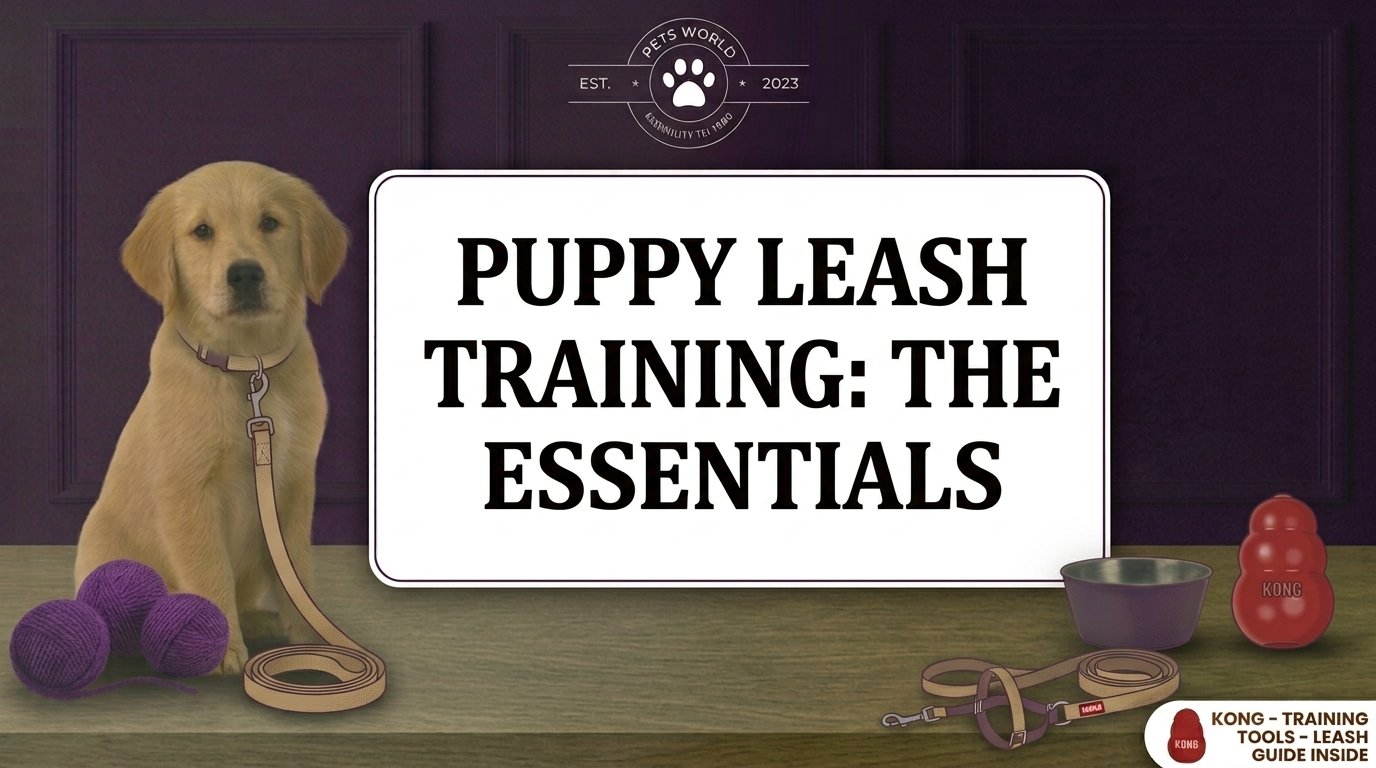
How to Leash Train a Puppy is one of the most essential skills you must teach your young dog to ensure a lifetime of safe, peaceful, and enjoyable outdoor adventures together. When a puppy experiences a collar, harness, or leash for the very first time, the feeling of physical restraint can be confusing, intimidating, or frustrating. Many puppies react by freezing in place like an anchor, thrashing around in panic, or pulling frantically toward every scent, dog, or person in sight. Uncontrolled leash pulling is not only exhausting for owners but can also damage a growing puppy’s delicate throat and neck structure. By employing positive reinforcement, gradual desensitization, and proper equipment, you can teach your puppy to walk comfortably by your side on a loose leash.
In this ultimate training guide, we examine the importance of early leash etiquette, compare collars vs. harnesses, outline a 4-phase training framework, address common walking obstacles (like leash biting and pulling), and provide answers to pressing questions from pet parents.
Quick Summary (How to Leash Train a Puppy)
Indoor Preparation First: Always begin gear introduction and leash practice inside your quiet home before venturing into noisy outdoor environments.
Harness Advantage: A front-clip Y-harness protects a puppy’s developing trachea and neck vertebrae from injury caused by sudden pulling.
Be a Red Light: If your puppy pulls tightly on the leash, stop immediately and stand firm like a tree until the tension slackens. Never drag or jerk the puppy back.
High-Value Rewards: Reward loose leash position (walking beside your hip) continuously with small, high-value training treats to build strong focal habits.
Why Early Leash Training Is Vital for Canine Development
Teaching proper leash manners early prevents ingrained behavioral issues from developing as your dog grows stronger and heavier.
1. Prevents Tracheal Trauma and Physical Stress
Young puppies have soft, delicate cartilage surrounding their airway. If a puppy wears a standard neck collar and pulls forcefully against a tight leash, the pressure can cause severe coughing, neck strain, and long-term tracheal collapse—especially in small breeds like Yorkies, Pugs, and Pomeranians.
2. Ensures Outdoor Safety and Control
A reliable leash connection keeps your puppy safe from oncoming traffic, poisonous ground items, aggressive stray animals, and unexpected loud noises that might cause them to bolt in fear.
3. Provides Essential Mental Stimulation
Daily outdoor walks are not just for physical exercise; they offer vital mental enrichment. Exploring new scents, sights, and sounds on a calm, stress-free leash walk tires out a puppy’s brain far more effectively than running aimlessly in a yard.
Selecting the Right Gear: Collar vs. Harness vs. Leash Types
Equipping your puppy with ergonomic, high-quality gear makes the learning process comfortable and safe.
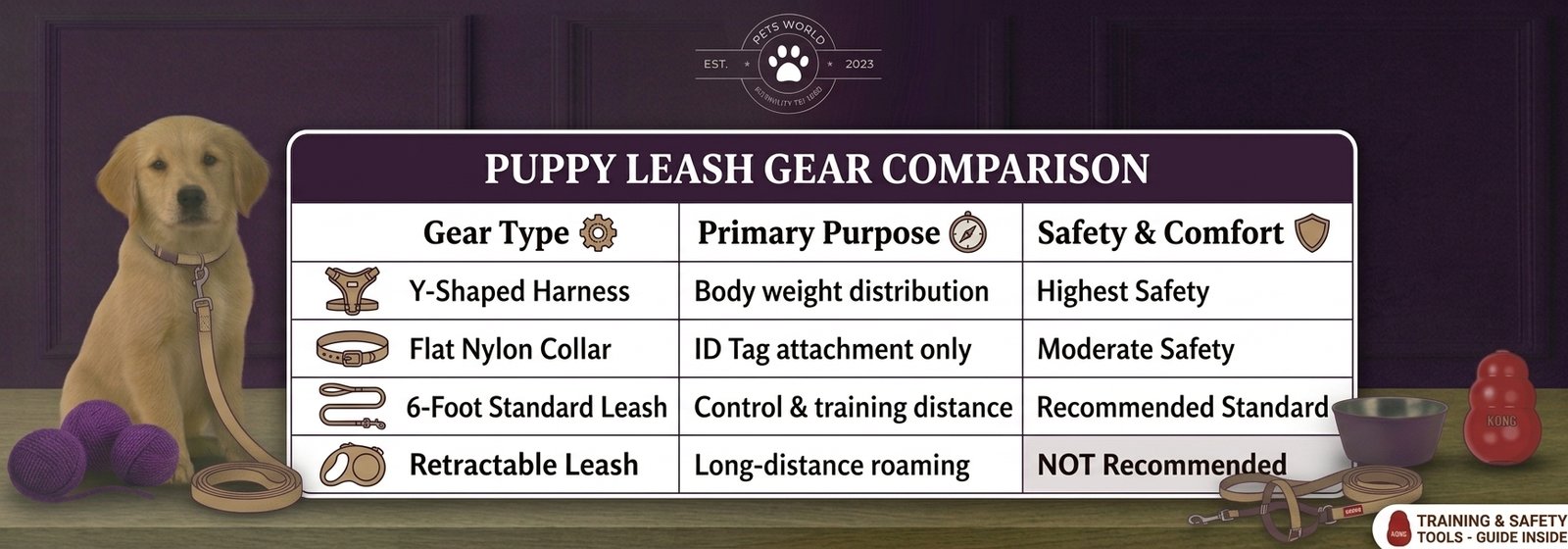
1. Y-Shaped Padded Harness (Highly Recommended)
An ergonomic, Y-shaped harness fits across the puppy’s chest and shoulders rather than pressing on the throat. Harnesses featuring both a back clip (for relaxed walks) and a front-chest clip (for anti-pulling control) are ideal for growing puppies.
2. Flat Nylon Collar
A lightweight flat collar is perfect for holding your puppy’s rabies tags, microchip ID, and owner contact information. Ensure you can fit two fingers comfortably between the collar and your puppy’s neck.
3. 6-Foot Fixed Nylon or Leather Leash
Avoid retractable leashes during the training phase. Retractable leashes teach puppies a dangerous lesson: If I pull against constant tension, the leash extends and I get where I want to go! Stick to a lightweight 6-foot fixed leash.
The 4-Phase Step-by-Step Leash Training Framework
Mastering leash training requires a systematic, step-by-step approach that moves from zero-distraction environments to public spaces.
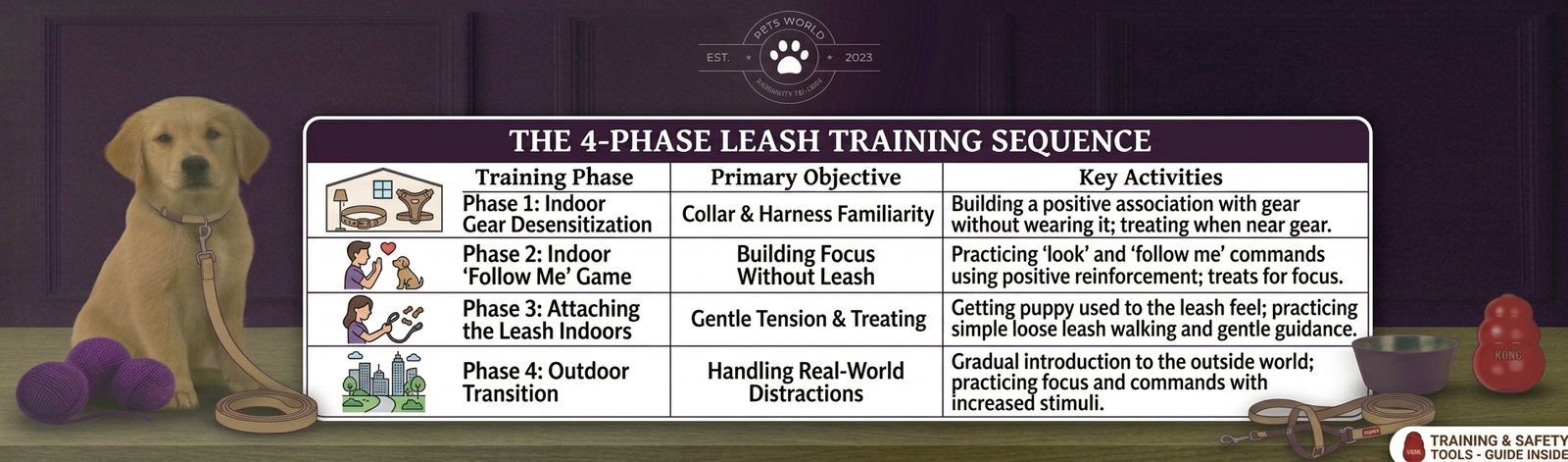
Phase 1: Indoor Gear Desensitization
Put the harness and collar on your puppy inside the house for short 5-minute periods while engaging them in fun activities (like playing or eating meals).
If your puppy tries to scratch at the harness or shake, distract them immediately with a toy or high-value treat.
Once the puppy ignores the gear completely, move to Phase 2.
Phase 2: The Indoor “Follow Me” Cue
Before attaching a leash, teach your puppy that walking near your hip produces delicious rewards.
Stand in a quiet hallway with treats in your hand. Take two steps forward, say a cheerful cue word like “Let’s Go!”, and reward your puppy the moment they step up beside your leg.
Repeat this mini-game until your puppy happily follows your foot movements indoors.
Phase 3: Attaching the Leash Indoors
Clip the 6-foot leash to the harness and let the puppy drag it loosely behind them on carpeted floors while supervised.
Next, pick up the handle softly without applying backward pull. Walk around the living room, rewarding the puppy every time the leash remains slack (forming a “U” shape between you and the dog).
Phase 4: Transitioning to the Outdoor World
Step outside into a quiet driveway, backyard, or calm hallway.
Keep outdoor sessions short (5 to 10 minutes) initially, as outdoor smells and sounds will capture your puppy’s attention.
Continuously mark and reward moments when your puppy checks in with eye contact or walks beside you without tension.
Troubleshooting Common Leash Walking Problems
Even with careful preparation, puppies naturally encounter hiccups during leash training. Here is how to handle the three most common obstacles:
1. The “Becomes an Anchor” Problem (Refusing to Move)
If your puppy sits or lays down on the sidewalk and refuses to budge:
Do NOT drag them. Dragging causes panic and fear-based resistance.
Crouch down a few feet ahead, speak in an upbeat tone, and offer a smelly, high-value treat (like a tiny piece of freeze-dried liver or cheese).
As soon as the puppy takes a single step forward toward you, praise them and deliver the reward.
2. The Constant Puller (The “Tree” Method)
If your puppy rushes forward, pulling the leash completely taut:
Become a Tree: The instant the leash becomes tight, freeze immediately. Stop moving completely.
Do not yank or jerk the leash back. Simply wait silently.
When the puppy realizes pulling gets them nowhere, they will eventually pause, look back at you, or take a step backward—causing the leash to go slack.
The moment the leash goes slack, mark the behavior (“Yes!”) and resume walking forward. This teaches the puppy: A slack leash moves us forward; a tight leash stops the fun.
3. The Leash Biter / Tug-of-War Player
Puppies often grab the dangling leash in their mouth and shake it like a toy.
Never pull back on the leash when they bite it, as this creates a fun game of tug-of-war.
Drop your hand low and keep the leash completely still and rigid. Unmoving leashes are boring to chew.
Swap the leash out of their mouth by offering an approved rubber toy or treat, then continue walking.
Critical Leash Training Mistakes to Avoid
Using Choke Chains, Prong Collars, or Slip Leads: Harsh corrective collars inflict acute neck pain, cause fear, and damage the human-dog bond. Positive reinforcement achieves faster, permanent results safely.
Walking Too Far, Too Fast: Young puppies have soft growth plates in their joints. Avoid long, strenuous road walks. For an 8-to-16-week-old puppy, a 10-to-15-minute sniffing walk is more than enough exercise.
Inconsistent Walking Expectations: If you allow your puppy to pull wildly toward a fire hydrant today, but scold them for pulling tomorrow, the puppy becomes hopelessly confused.
Frequently Asked Questions (Q&A Section)
Q1: What age should I start leash training my puppy?
Answer: You can begin indoor gear desensitization as early as 7 to 8 weeks of age as soon as your puppy arrives home. Official outdoor walks in public areas should begin after your veterinarian approves your puppy’s vaccination coverage (typically around 12 to 16 weeks).
Q2: Why does my puppy cry or scratch at their harness when I put it on?
Answer: Harnesses feel unusual on a puppy’s skin and coat initially. To eliminate scratching, pair harness application with high-value food rewards or mealtime so your puppy builds a positive brain connection: Harness on = Delicious food arrives!
Q3: Should I let my puppy sniff everything on walks, or force them to heel beside me?
Answer: Let them sniff! Sniffing releases dopamine in a dog’s brain, lowers heart rate, and provides vital mental stimulation. Strict “heeling” is an advanced competition cue; everyday leisure walks should focus on loose-leash freedom where the puppy explores safely without pulling you.
Q4: How long does it take to fully leash train a puppy?
Answer: With daily, consistent 5-minute practice sessions, most puppies learn loose-leash walking principles within 2 to 4 weeks. However, maintaining reliable focus around major outdoor distractions (like squirrels or other dogs) requires ongoing practice throughout adolescence (up to 1 year of age).
Step Out with Confidence at Pets World Egypt
Mastering how to leash train a puppy unlocks a world of joyful outdoor exploration, exercise, and social bonding for you and your canine companion. Equipping your pet with ergonomic Y-shaped harnesses, soft padded nylon leashes, treat pouches, and healthy training rewards ensures every walk is safe, comfortable, and rewarding.
At Pets World Egypt, we carry a curated collection of premium puppy harnesses, durable leashes, reflective walking gear, and veterinarian-approved training treats tailored to support your pet at every stage of growth. Visit our store today to gear up for your next adventure!