Canada
 USA
 Japan



How to Stop Puppy Biting: Training Guide for Pet Parents

How to Stop Puppy Biting is one of the most urgent questions new pet owners ask the moment a playful puppy arrives home. Those razor-sharp needle teeth can turn gentle playtime into a painful experience, leaving hands covered in scratches and owners feeling frustrated. While mouthing and nipping are entirely natural developmental behaviors for puppies, letting biting go unaddressed can lead to severe behavioral issues in adulthood. Puppies do not possess hands; they explore their environment, communicate, and soothe their aching gums during teething primarily through their mouths. However, teaching your young canine companion proper bite inhibition and redirecting their urge to bite is essential for building a safe, happy household.
In this ultimate training guide, we cover everything you need to know to curb puppy biting effectively. You will learn the underlying reasons behind mouthing, step-by-step positive reinforcement techniques, bite inhibition principles, teething management, and critical mistakes to avoid during training.
Quick Summary (How to Stop Puppy Biting Guide)
Primary Reason for Biting: Puppies bite to explore surroundings, initiate play, and relieve gums during the teething phase (3 to 6 months).
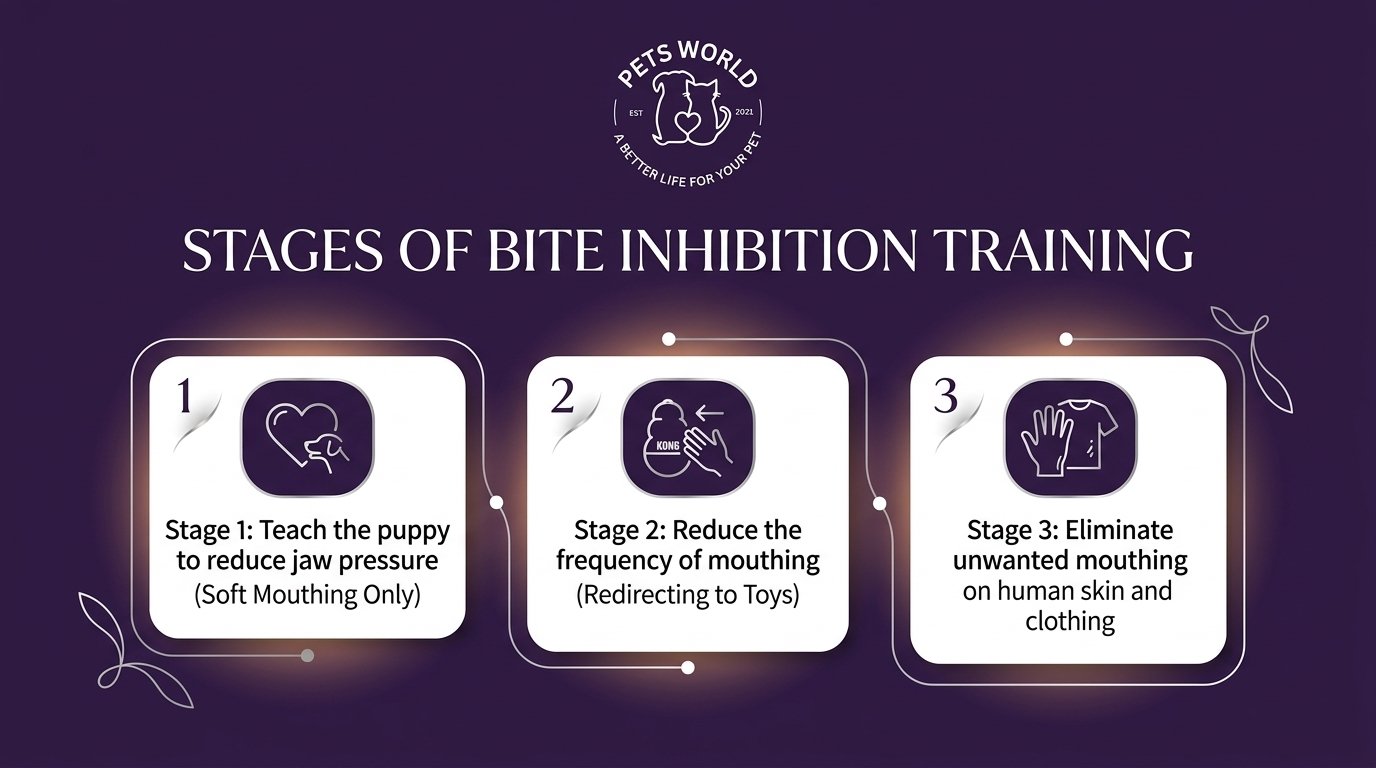
Bite Inhibition First: The initial goal is teaching your puppy to control force rather than stopping mouth contact instantly.
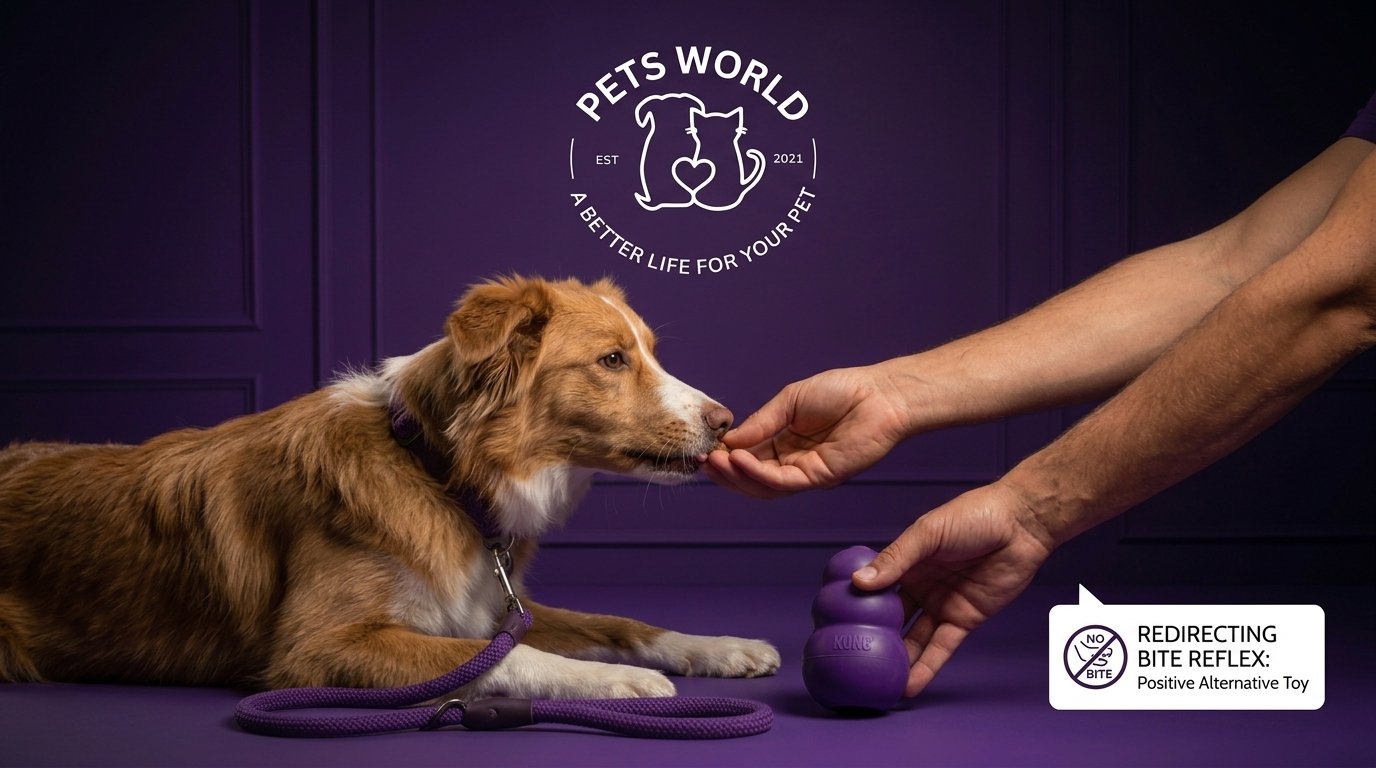
Redirection Strategy: Always swap human skin or clothing with an appropriate chew toy or cold teething ring.
Consistency is Crucial: Everyone in the household must apply the exact same reaction when the puppy bites to avoid confusing the pet.
Why Do Puppies Bite? Understanding Canine Development
To correct puppy biting, you must first understand why it happens in the first place. Puppies do not bite out of malice or aggression; their mouthing behavior stems from distinct developmental needs.
1. Environmental Exploration
Puppies interact with the world through smell, sight, and mouth touch. Textures, fabrics, human fingers, and furniture legs are all novel items that puppies test with their teeth to learn what is edible, playable, or firm.
2. Play Behavior and Litter mate Learning
When puppies play with their mothers and litter mates, play fighting, chasing, and gentle nipping are constant. If a puppy bites a litter mate too hard, the bitten puppy lets out a loud, high-pitched yelp and stops playing. This natural feedback teaches puppies bite inhibition—the ability to control the pressure of their jaws.
3. The Teething Phase (3 to 6 Months)
Between 12 weeks and 6 months of age, puppies shed their 28 baby teeth to make room for 42 permanent adult teeth. This physiological process causes significant gum inflammation, soreness, and irritation. Biting on hard surfaces or soft skin provides temporary pressure relief to their aching gums.
What Is Bite Inhibition and Why Is It Vital?
Before attempting to stop your puppy from putting their mouth on you altogether, you must first teach them bite inhibition.
Bite inhibition refers to a dog’s internal awareness of the power of their jaws. A dog that learns bite inhibition as a puppy may still open its mouth if startled or injured in adulthood, but because it learned jaw pressure control, it will not break human skin. If you skip this developmental step and immediately punish all mouthing, the puppy learns not to mouth but never learns how hard is too hard. If that dog bites under extreme stress later in life, the bite is much more likely to inflict serious injury.
Step-by-Step Methods: How to Stop Puppy Biting
Teaching your puppy to stop nipping requires patience, timing, and positive reinforcement. Follow these 5 proven steps to guide your puppy toward gentle behavior.
Step 1: The “Yelp” and Freeze Technique
This method mimics the natural social cues puppies receive from their litter mates.
Engage in gentle play with your puppy.
The moment your puppy’s teeth touch human skin with painful force, utter a sharp, high-pitched “Ouch!” or yelp.
Immediately let your hand go limp. Do not pull your hand away abruptly, as sudden movement triggers a puppy’s instinctual chase drive.
Pause all play for 10 to 15 seconds.
Resume play calmly. If the puppy bites hard again, repeat the sequence up to 3 times in a 15-minute window.
Step 2: Immediate Toy Redirection
Puppies need an outlet for their biting instincts. Always keep an approved chew toy within arm’s reach during play sessions.
As soon as your puppy approaches your hands or feet to bite, offer an attractive rubber chew toy or rope toy instead.
Praise your puppy profusely in a warm, enthusiastic voice the instant their teeth grip the toy rather than your skin.
This teaches the puppy a clear association: Chewing on toys gets me attention and praise; chewing on hands ends the fun.
Step 3: The “Reverse Time-Out”
If yelping excites your puppy further (which often happens with high-drive breeds like German Shepherds or Malinois), use a reverse time-out.
When your puppy bites hard, say a calm cue word like “Too Bad,” stand up immediately, and cross your arms.
Turn your back on the puppy and avoid all eye contact, verbal interaction, or physical touch.
If the puppy continues nipping at your legs or ankles, step out of the room and close the door for 30 to 60 seconds.
Return calmly. This teaches the puppy that biting causes the most valuable resource in their world—your presence—to disappear instantly.
Step 4: Manage Teething Discomfort
If your puppy is actively losing baby teeth, training alone will not stop the physical urge to chew. You must satisfy their physiological need for pressure relief.
Frozen Puppy Chew Toys: Freeze durable rubber toys filled with wet puppy food or dog-friendly bone broth.
Cold Washcloths: Dampen a clean cloth, twist it into a rope, and freeze it for a soothing chew session.
Teething Treats: Offer safe, digestible puppy teething sticks designed specifically for sore gums.

Critical Mistakes to Avoid During Training
Many well-meaning pet parents inadvertently encourage or prolong biting behavior by making simple training errors.
1. Do Not Use Physical Punishment
Never hit, slap, hold a puppy’s muzzle shut, or tap their nose. Physical discipline induces fear, breaks trust, and frequently escalates defensive biting into true aggressive behavior as the puppy grows older.
2. Avoid Rough Play with Hands
Never use your bare hands to wrestle, slap the floor, or tease your puppy’s face. This teaches the puppy that human hands are play wrestling targets. Always use a long toy or tug rope to create distance between human skin and puppy teeth.
3. Do Not Run Away or Wave Hands
Waving hands in the air or running away while screaming sounds like an exciting game of chase to a puppy. Keep movements slow, deliberate, and calm whenever your puppy becomes overly aroused.
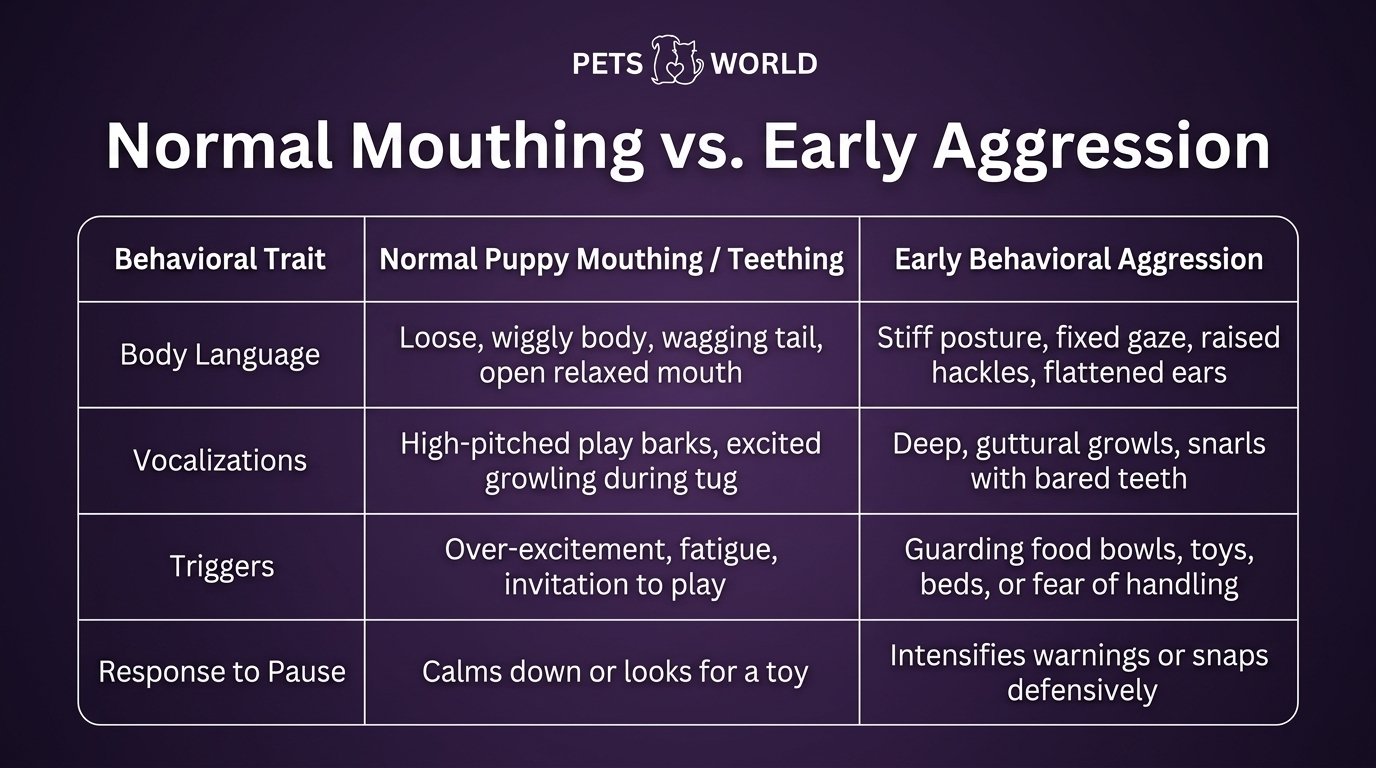
Comparing Puppy Mouthing vs. True Aggression
It is important for owners to distinguish between normal juvenile play nipping and early signs of behavioral aggression.
Frequently Asked Questions (Q&A Section)
Q1: At what age do puppies naturally stop biting?
Answer: Most puppies naturally decrease their biting intensity around 6 to 7 months of age, coinciding with the completion of their adult teeth eruption. However, without active bite inhibition training during the early months (8 to 16 weeks), the habit of mouthing human skin can persist into adulthood.
Q2: Why does my puppy bite my ankles and feet when I walk?
Answer: Herding breeds (such as Corgis, Border Collies, and Australian Shepherds) and high-energy puppies are naturally triggered by movement. Walking feet resemble moving prey or livestock. To stop this, stop moving immediately when your puppy nips your feet, redirect them with a toy, or carry a chew toy to toss ahead of you as you walk.
Q3: Why does my puppy bite harder when I say “No” or yelp?
Answer: High-pitched screams or vocal scolding can sometimes be interpreted by a puppy as high-energy play noises, increasing their arousal state. If yelping makes your puppy more excited, discontinue it immediately and rely on silent “reverse time-outs” (leaving the room for 30 seconds).
Q4: How long does it take to train a puppy to stop biting?
Answer: With daily consistency across all family members, you will notice a significant reduction in bite force within 1 to 2 weeks, and a dramatic decrease in mouthing frequency within 3 to 4 weeks. Consistency is the single most important factor.
Building a Lifelong Bond with Pets World Egypt
Mastering how to stop puppy biting requires patience, clear communication, and the right tools. Providing your growing puppy with durable teething toys, high-protein nutrition to support jaw development, and soothing treats makes the training journey smoother for both you and your pet.
At Pets World Egypt, we carry a curated selection of puppy-safe chew toys, teething aids, positive reinforcement training treats, and crate accessories designed to keep your puppy healthy and engaged. Visit our store today to equip your home with the ultimate puppy care essentials!