Canada
 USA
 Japan



Dog Vaccination Schedule: complete Guide to Dog Immunization

Dog Vaccination Schedule is the fundamental health roadmap every pet owner needs to protect their canine companion from deadly viral and bacterial infections. Welcoming a new puppy into your home brings immense joy, but it also carries the critical responsibility of safeguarding their developing immune system. During the first few weeks of life, puppies rely on maternal antibodies absorbed through their mother’s colostrum. However, as these natural protective antibodies wane between 6 and 16 weeks of age, puppies enter a vulnerable immunity gap where dangerous pathogens such as Canine Parvovirus and Canine Distemper can strike. Establishing a structured, veterinarian-approved dog vaccination schedule ensures your pet builds robust, lifelong immunity against preventable illnesses.

In this comprehensive guide, we explore everything you need to know about puppy and adult dog immunizations, including core versus non-core vaccines, detailed age-by-age timelines, critical disease overviews, potential side effects, and essential post-vaccination care tips.
Quick Summary
Primary Vaccination Age: Puppies should begin their initial vaccination series between 6 to 8 weeks of age.
Core Vaccines: Essential for all dogs regardless of lifestyle (DHPP combination vaccine and Rabies).
Non-Core Vaccines: Administered based on environment and exposure risk (Leptospirosis, Bordetella, Lyme Disease, Canine Influenza).
Booster Frequency: Boosters are given every 3–4 weeks until 16 weeks of age, followed by a 1-year booster and subsequent 1-to-3-year booster intervals.
Understanding Core vs. Non-Core Dog Vaccines
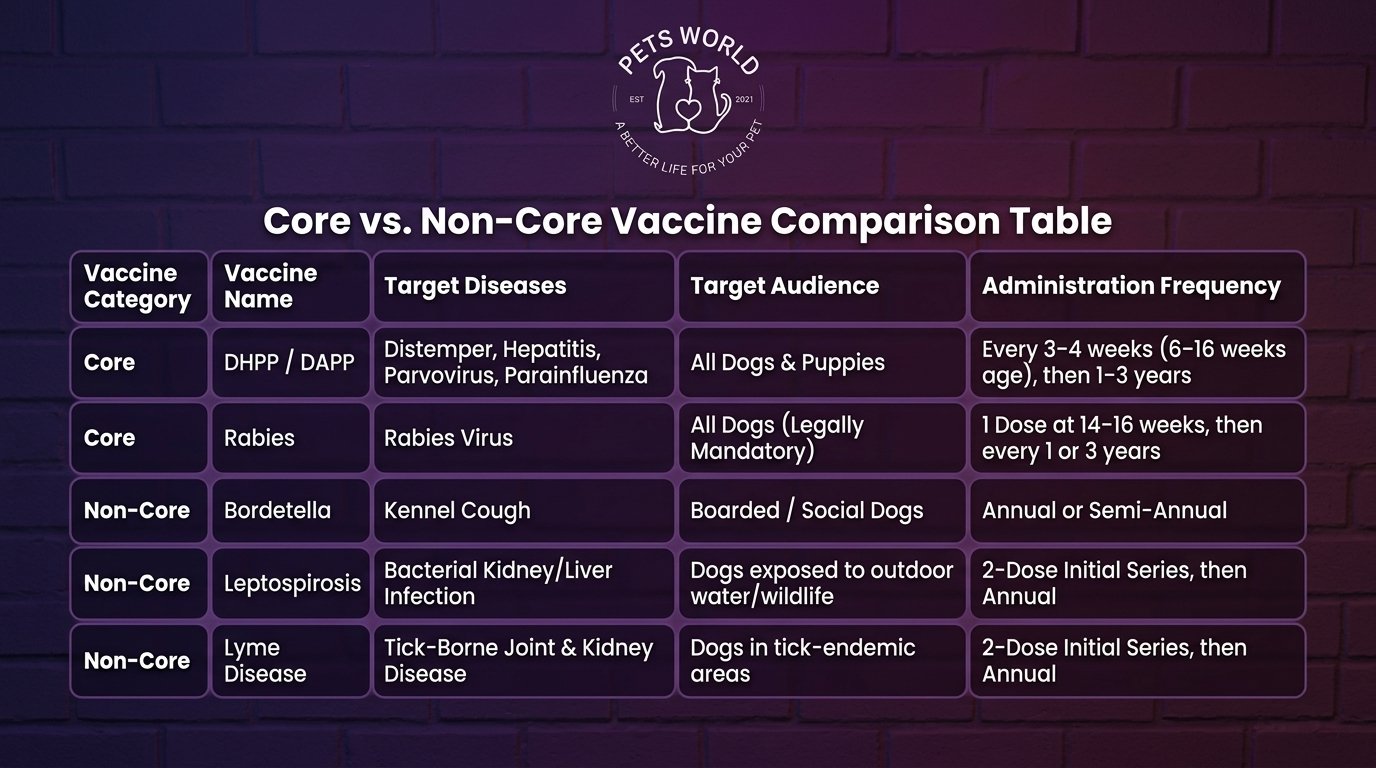
Before diving into the timeline, it is essential to distinguish between the two primary categories of canine immunizations: Core Vaccines and Non-Core Vaccines.
Core Vaccines
Core vaccines are considered mandatory for all dogs, regardless of their location, lifestyle, or breed. These vaccines protect against widespread, highly contagious, and frequently fatal diseases that pose a severe threat to canine health.
Canine Parvovirus (Parvo): A highly contagious viral infection causing severe gastrointestinal distress, hemorrhagic enteritis, and rapid dehydration.
Canine Distemper Virus: A devastating viral disease affecting the respiratory, gastrointestinal, and central nervous systems.
Canine Hepatitis (Adenovirus Type 1 & 2): A viral infection targeting the liver, kidneys, lungs, and eyes.
Rabies Virus: A fatal zoonotic viral disease attacking the central nervous system, transmissible to humans.
Non-Core Vaccines
Non-Core vaccines are recommended by veterinarians based on your dog’s geographic location, daily lifestyle, boarding habits, and exposure risks.
Bordetella Bronchiseptica: The primary bacterial cause of “Kennel Cough,” essential for dogs visiting grooming salons, dog parks, or boarding kennels.
Leptospirosis: A bacterial infection transmitted through water or soil contaminated by wildlife urine, which can cause kidney and liver failure (also zoonotic).
Lyme Disease (Borrelia burgdorferi): A tick-borne bacterial disease prevalent in grassy or wooded areas.
Canine Influenza (Dog Flu): A contagious respiratory virus common in high-density canine environments.
The Complete Puppy Dog Vaccination Schedule
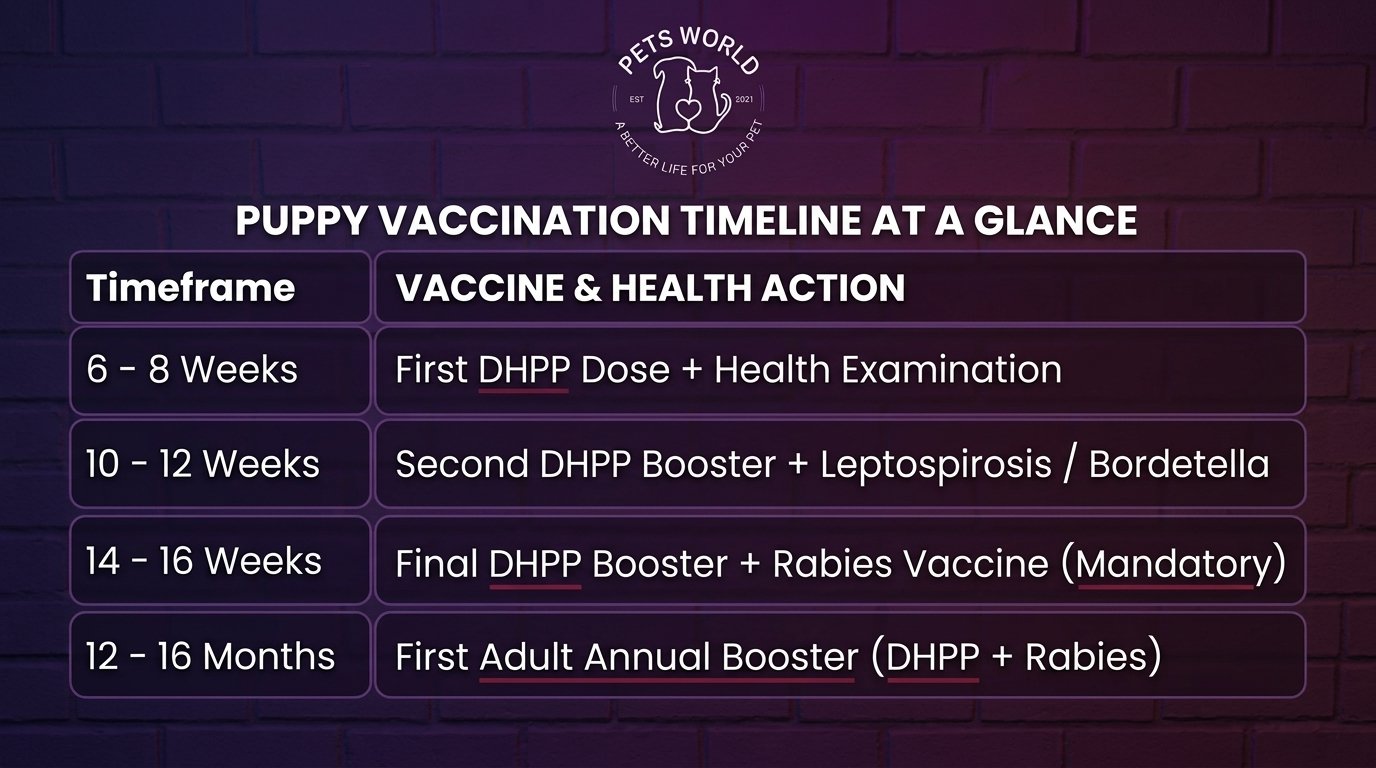
Following a strict timeline is crucial to ensure that maternal antibody interference does not deactivate the vaccine while keeping the window of susceptibility as short as possible.
Phase 1: 6 to 8 Weeks Old
At this early stage, maternal antibodies begin to clear from the puppy’s bloodstream.
Primary Core Vaccine: First dose of the DHPP combination vaccine (Distemper, Hepatitis, Parvovirus, Para-influenza).
Health Checkup: Full physical examination, fecal test for intestinal parasites, and deworming treatment.
Optional: Bordetella intranasal or oral vaccine if the puppy is in a group breeding environment.
Phase 2: 10 to 12 Weeks Old
The puppy’s immune system is now actively responding to vaccination boosters.
Core Booster: Second dose of the DHPP combination vaccine.
Non-Core Additions: First dose of the Leptospirosis vaccine and Bordetella vaccine if lifestyle warrants protection.
Phase 3: 14 to 16 Weeks Old
This is the most critical phase for establishing long-term active immunity.
Core Booster: Final puppy booster of the DHPP combination vaccine. (Crucial Note: The final Parvovirus booster MUST be given at or after 16 weeks to overcome maternal antibody interference).
Rabies Vaccine: Administered as a single dose (required by law in most regions).
Non-Core Boosters: Second dose of Leptospirosis and Lyme disease vaccines.
Phase 4: Adult Booster (12 to 16 Months)
One year after completing the initial puppy series, your dog requires adult booster doses to maintain protective antibody titers.
DHPP Adult Booster: Given at 1 year old, then repeated every 1 to 3 years depending on veterinary protocol and vaccine formulation.
Rabies Booster: Given 1 year after the initial dose, then updated every 1 or 3 years as mandated by local laws.
Annual Non-Core Boosters: Leptospirosis, Bordetella, and Lyme boosters renewed annually for high-risk dogs.
Deadly Diseases Prevented by Timely Immunization
Understanding the severe nature of canine diseases highlights why missing a shot on your dog vaccination schedule is a dangerous risk.
1. Canine Parvovirus (Parvo)
Parvovirus attacks the rapidly dividing cells of the dog’s intestinal lining and bone marrow. Symptoms include severe bloody diarrhea, uncontrollable vomiting, extreme lethargy, fever, and rapid septic shock. Without aggressive veterinary hospitalization and intensive fluid therapy, Parvovirus carries a mortality rate exceeding 90% in unvaccinated puppies. Furthermore, newer mutated strains of Parvovirus require modern, broad-spectrum vaccines to ensure total protection.
2. Canine Distemper Virus
Distemper is an airborne virus that spreads through respiratory secretions. It produces a multi-systemic infection causing nasal discharge, coughing, severe pneumonia, hardening of the footpads (“hard pad disease”), and progressive neurological signs such as muscle twitching, seizures, and paralysis. Dogs that survive Distemper often suffer permanent neurological damage.
3. Rabies
Rabies is a lethal viral encephalitis that affects all warm-blooded mammals, including humans. Transmitted primarily through bites from infected animals, the virus travels along peripheral nerves to the brain. Once clinical signs—such as behavioral changes, aggression, hypersalivation, and paralysis—appear, Rabies is 100% fatal. Annual or triennial Rabies vaccination is a non-negotiable public health standard worldwide.
4. Leptospirosis
Leptospirosis is caused by spiral-shaped bacteria (leptospires) found in muddy water, puddles, and soil contaminated by rodent or wildlife urine. Infected dogs experience acute kidney failure, liver dysfunction, jaundice, and bleeding disorders. Because Leptospirosis can infect humans, vaccinating outdoor dogs protects both the pet and the human family.
Managing Post-Vaccination Care and Side Effects
It is completely normal for puppies and adult dogs to display mild reactions after receiving their shots as their body builds an immune response.
Normal Mild Reactions (24–48 Hours)
Slight lethargy or sleepiness
Mild tenderness or small swelling at the injection site
Low-grade fever
Temporary loss of enthusiasm for food
Rare Severe Reactions (Seek Emergency Vet Care Immediately)
While adverse allergic reactions (anaphylaxis) are extremely rare, pet owners should monitor their dogs closely for 2 to 4 hours post-vaccination:
Facial swelling, hives, or severe itching
Continuous vomiting or severe diarrhea
Difficulty breathing or persistent coughing
Sudden collapse, extreme weakness, or pale gums
Frequently Asked Questions (Q&A Section)
Q1: What should I do if my puppy misses a scheduled vaccine dose?
Answer: If your puppy misses a vaccine window by more than 2 to 3 weeks, their antibody response may drop below protective levels. Contact your veterinarian immediately. Depending on the delay and the puppy’s age, your vet may recommend restarting the 2-dose or 3-dose primary booster series to guarantee solid immunity.
Q2: Can my puppy go outside or interact with other dogs before completing all vaccinations?
Answer: No. Puppies should not walk in public places, dog parks, or touch ground frequented by unknown dogs until 7 to 14 days AFTER their final 16-week vaccination boost. Early exposure to public soil creates a massive risk of contracting environmental viruses like Parvovirus, which can survive in soil for months.
Q3: Are annual vaccine boosters really necessary for indoor dogs?
Answer: Yes. Core vaccines like Rabies are required by law regardless of whether your dog lives indoors. Additionally, viruses like Parvovirus can easily be tracked inside your home on the soles of your shoes, clothing, or bicycle tires. Consult your vet to customize a schedule based on antibody titer testing if you prefer fewer boosters in adult years.
Q4: How long does it take for a vaccine to provide full protection?
Answer: Vaccines do not provide instant immunity. It typically takes 10 to 14 days after administering a vaccine dose for the dog’s immune system to process the antigen and produce adequate protective antibody levels.
Protecting Your Dog’s Health with Pets World Egypt
Keeping up with a strict dog vaccination schedule is the greatest gift of health you can give your pet. Alongside preventive medical care, supporting your puppy with premium nutrition, immune-boosting vitamins, hygienic grooming supplies, and safe indoor toys creates the ultimate foundation for longevity and happiness.
At Pets World Egypt, we are dedicated to providing pet parents with high-quality supplies, expert guidance, and healthy lifestyle essentials. Explore our full range of puppy food, wellness products, and pet care accessories today to give your furry friend the vibrant, healthy life they deserve!